
How to Choose a Flat Pack Furniture Hardware Kit Supplier for Reliable Assembly
A flat pack furniture hardware kit supplier does much more than put screws into a bag.
For engineers, sourcing managers, furniture brands, and product teams, the supplier affects how quickly a cabinet goes together, how many assembly complaints come back, and whether the finished product still feels solid after repeated handling.
This matters even more for simple carcass-style furniture, small wooden boxes, storage organizers, open-top cabinet frames, and panel-based furniture. These products may look simple, but their structure depends heavily on the quality of screws, connectors, brackets, dowels, and corner fittings.
Many buyers focus first on panel material, surface finish, and carton design. Then they treat hardware as a commodity.
That is usually where problems begin.
If the fasteners are inconsistent, the kit becomes harder to assemble. If the connector size is wrong, the panels may not align cleanly. If the packaging is confusing, workers or end users waste time sorting parts. If one small item is missing, the whole product can feel poorly designed.
In flat-pack furniture, hardware is part of the product experience. It is not just a line item in the bill of materials.
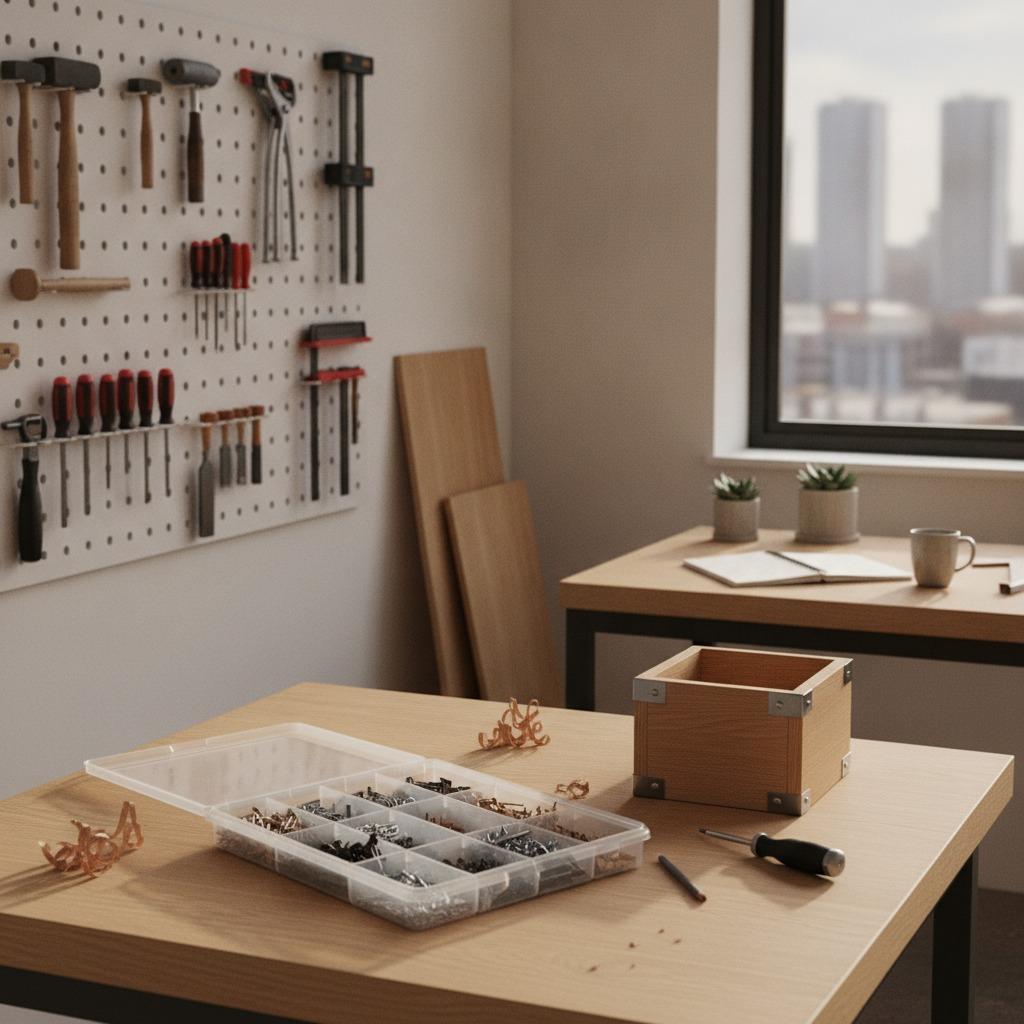
What a dependable flat pack hardware kit should include
A proper flat pack hardware kit brings together the parts needed to connect pre-cut panels, hold corner joints, and make assembly predictable.
Depending on the furniture design, the kit may include:
| Hardware Type | Common Function |
|---|---|
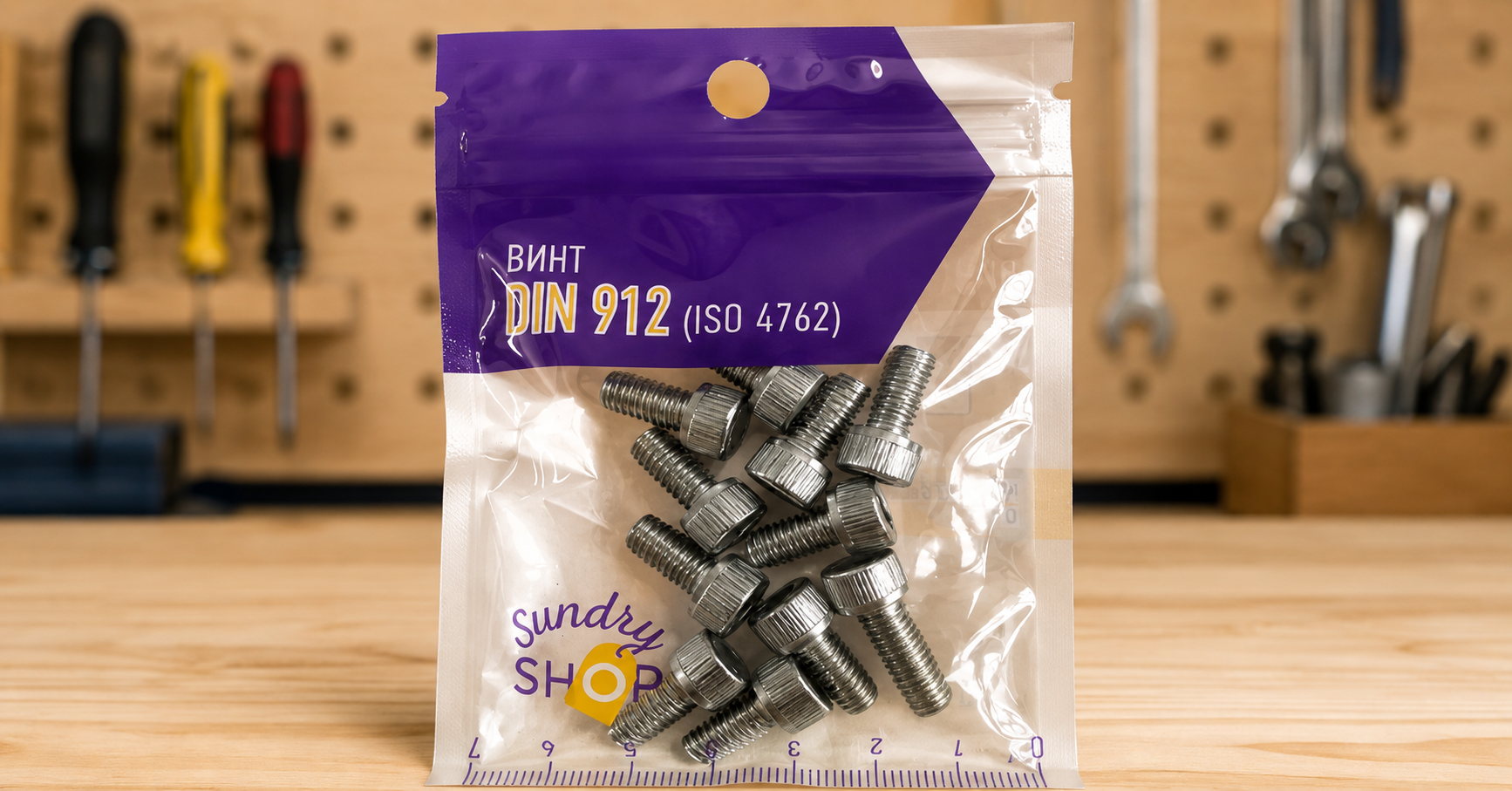
| Machine screws | Stable fastening for metal or threaded parts |
| Self-tapping screws | Fastening into wood-based panels or compatible substrates |
| Precision screws | Smaller or more controlled assembly requirements |
| Angle brackets | Corner support and frame reinforcement |
| Wooden dowels | Panel alignment and structural positioning |
| Cam-lock connectors | Hidden knock-down furniture connections |
| Plastic spacers or covers | Spacing, finishing, or surface protection |
| Standard parts | Washers, nuts, inserts, sleeves, or related fittings |
The exact mix depends on the product.
A small wooden storage box may need simple screws and corner brackets. A cabinet carcass may need dowels, cam connectors, and plate-style fittings. A wardrobe or shelving unit may require stronger connectors and more carefully sorted packs.
The value of a flat pack hardware kit is not that every component is complicated. The value is that every part has a clear role and arrives in the correct quantity, finish, and package.
Why materials and standards matter
Furniture hardware needs to match the product environment.
Stainless steel, iron, and aluminum each have different advantages. Some parts may require corrosion resistance. Others may need lower cost. Some visible connectors may need a cleaner finish, while hidden interior fasteners may only need functional consistency.
For simple wooden products, visible hardware can strongly affect perceived quality. A bracket that looks rough, a screw head that sits poorly, or a finish that does not match the furniture style can make the whole product feel less professional.
Jiangmen Jinhe Hardware Co., Ltd. focuses on machine screws, self-tapping screws, micro screws, precision screws, fasteners, standard parts, and non-standard customization. The company states that it works with materials such as stainless steel, iron, and aluminum, and follows GB, DIN, ANSI, BS, JIS, and ISO standards.
For buyers comparing a flat pack furniture fittings supplier, this standards-based approach helps make sourcing and reordering more predictable. It also gives engineering and procurement teams a clearer way to discuss replacement parts or customized hardware.
Where supplier capability becomes visible
There is a clear difference between a vendor that ships loose fasteners and a flat pack hardware kit manufacturer that understands assembly logic.
A better supplier thinks about the kit structure.
Which parts should be grouped together?
Which small components may be lost during transit?
Which parts should be labeled for faster assembly?
Which fasteners need to match a specific panel thickness?
Which components should be packed separately to avoid scratches or mixing?
These details may seem small. But in furniture assembly, they can decide whether the product feels easy to build or frustrating to finish.
One missing screw in a consumer furniture kit can create a support ticket. One wrong connector can trigger a return. One poorly labeled hardware bag can lead to bad reviews.
Jiangmen Jinhe Hardware Co., Ltd. states that it supports non-standard customization, which is useful for brands that need hardware kits matched to a specific carcass design, panel system, or assembly sequence. The company also says it performs strict inspection before delivery and provides necessary documentation.
For B2B buyers, this is often more valuable than chasing the lowest unit price. A cheaper kit that creates assembly friction is rarely cheaper in the long run.
Selection criteria buyers should not skip
When evaluating a flat pack furniture hardware supplier, buyers should look beyond the first sample bag.
1. Can the supplier maintain repeat consistency?
A sample may look acceptable. The real test is whether the supplier can repeat the same hardware set over multiple orders.
Buyers should confirm:
-
screw size consistency
-
connector dimensions
-
bracket thickness
-
finish stability
-
packing quantity
-
label format
-
carton marking
Repeat quality matters more than a perfect sample that cannot be reproduced.
2. Can the packaging support your workflow?
Packaging should match the buyer’s business model.
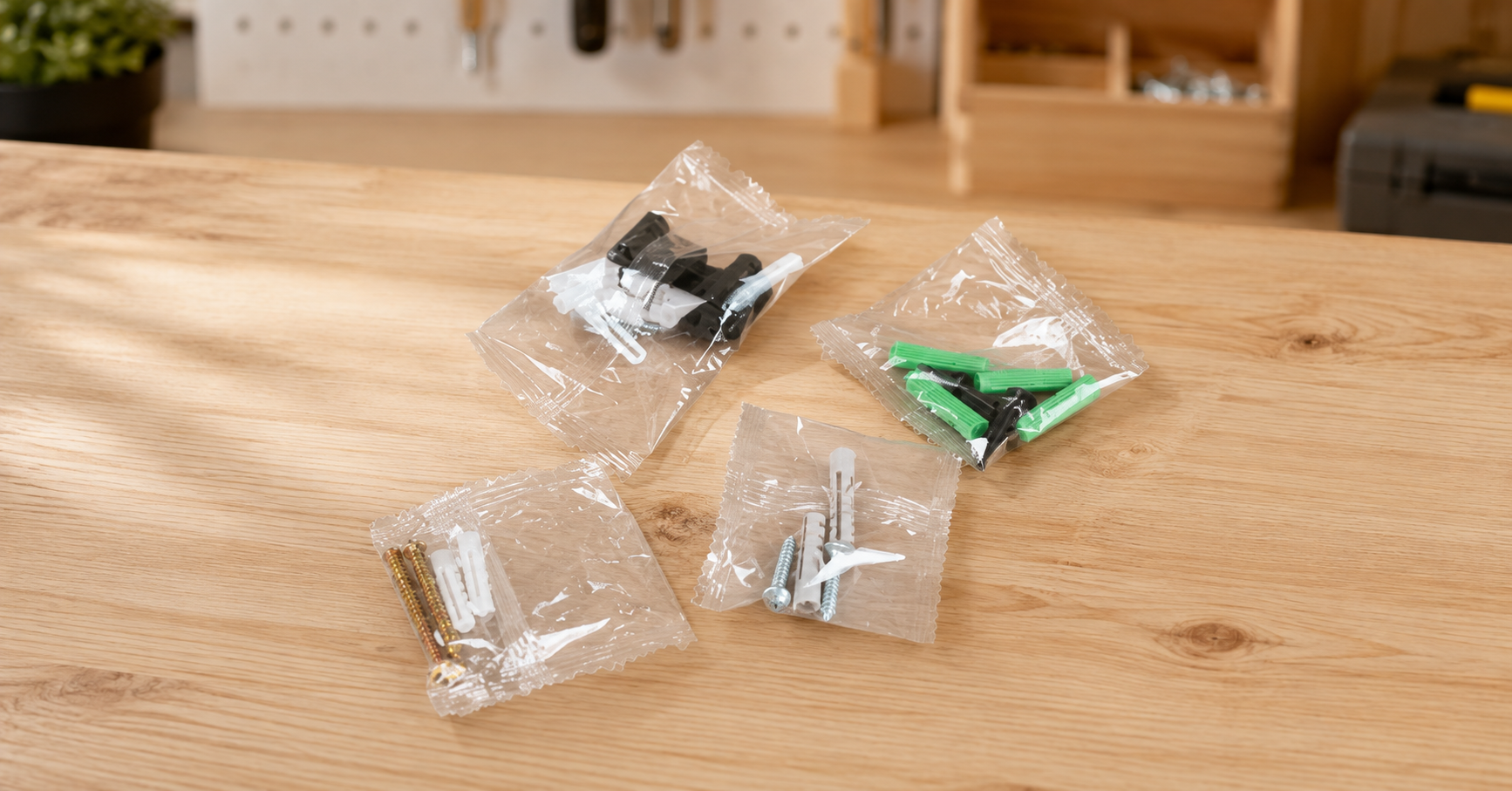
A furniture factory may need hardware packed by assembly step.
An e-commerce seller may need clean individual kits.
A distributor may need spare-part packs.
A retail brand may need branded packaging with clear labels.
If packaging is not organized, the buyer pays later through counting errors, rework, or customer complaints.
3. Can the supplier adapt when the design changes?
Furniture products often change after the first production run. Panel thickness may change. A bracket may need a new finish. A screw length may need adjustment. A connector may need to match a revised drilling position.
A supplier with non-standard customization ability can help buyers adapt without restarting the entire sourcing process.
4. Can they respond quickly?
Response time is not only a service detail. It affects production schedules.
Jinhe states that customer support responds within 30 to 60 minutes for issues and provides solutions within 2 hours. For sourcing managers under pressure, fast clarification can prevent a small packaging or dimension issue from delaying shipment.
5. Can they support logistics and export supply?
Hardware kits are small, but poor logistics can still create problems.
A kit that is technically correct but packed poorly may arrive mixed, damaged, or incomplete. Jiangmen Jinhe Hardware Co., Ltd. states that it provides warehousing, domestic logistics, and international freight forwarding. For overseas buyers, distributors, and cross-border sellers, this type of support can make the supply process smoother.
Common mistakes in flat pack furniture hardware sourcing
One common mistake is assuming all hardware is interchangeable.
It is not.
Screw geometry, bracket thickness, thread engagement, connector depth, dowel length, and surface finish all affect assembly quality. A part that looks similar in a sample tray may not perform the same when used with the real panel.
Another mistake is approving the kit without testing it on actual furniture panels. A screw may look fine by itself but feel loose, too tight, or poorly aligned once it meets MDF, particleboard, plywood, or solid wood.
A third mistake is treating packaging as an afterthought. If parts are mixed, labels are unclear, or small components move during shipping, the kit becomes harder to use even if the hardware itself is correct.
Buyers should also avoid focusing only on unit price. The real cost includes assembly time, replacement shipments, customer complaints, and production interruptions.
Practical buyer checklist before ordering
Before placing an order, buyers should confirm:
-
furniture drawing or product structure
-
panel thickness
-
hardware list
-
screw type and size
-
connector type
-
bracket dimensions
-
dowel length
-
material and finish
-
packaging method
-
kit quantity per carton
-
label requirements
-
inspection process
-
documentation needs
-
logistics and delivery requirements
-
repeat-order rules
For visible hardware, buyers should also confirm appearance. On simple wooden boxes, open cabinet frames, or storage products, small finish differences are easy to see because there is nowhere for the hardware to hide.
A good flat pack furniture hardware supplier should help buyers match the kit to the product architecture, not just quote the parts.
FAQ: High-Conversion Questions for Furniture Hardware Buyers
1. Can you customize a flat pack furniture hardware kit according to my drawing or BOM?
Yes. For OEM furniture projects, the kit can usually be customized according to drawings, bill of materials, panel thickness, drilling positions, and assembly sequence.
Customization may include screw sizes, connector types, bracket shapes, dowel quantity, packaging format, labels, and carton requirements.
2. What information should I provide to get an accurate quotation?
To receive a more accurate quotation, provide the furniture drawing, hardware list, panel thickness, target material, required quantity, packaging method, finish requirements, and delivery destination.
If the product is still in development, a sample panel or existing hardware sample can also help the supplier recommend a suitable solution.
3. Can I request samples before placing a bulk order?
Yes. Sample testing is strongly recommended.
Buyers should assemble the sample kit with the real panels, check screw fit, connector alignment, bracket position, packaging convenience, and component quantity before confirming mass production.
4. What is the MOQ for customized furniture hardware kits?
MOQ depends on the hardware type, customization level, packaging method, and production process.
Standard hardware usually supports more flexible quantities. Customized screws, special connectors, branded packaging, or project-specific kits may require a higher MOQ.
5. Can you provide OEM packaging or branded labels?
Yes, OEM packaging can usually be discussed for furniture brands, distributors, and e-commerce sellers.
Options may include labeled bags, compartment boxes, branded stickers, carton labels, barcode labels, or customer-specific packaging formats. Packaging should be confirmed early because it affects cost and lead time.
6. How do you control missing parts in each hardware kit?
A reliable supplier should use counting, sorting, inspection, and packaging control before shipment.
Buyers should ask how each kit is checked, how small components are separated, and whether inspection records or packing photos can be provided when required.
7. How long does production usually take?
Lead time depends on whether the hardware is standard or customized, the order quantity, the packaging requirements, and the production schedule.
Standard items are usually faster. Custom components, special finishes, or branded packaging may require more time for sample approval and production.
8. Can one supplier provide screws, connectors, brackets, and packaging together?
Yes, if the supplier has both fastener supply and kitting capability.
Working with one supplier can reduce communication costs, improve consistency, and make repeat orders easier to manage compared with sourcing parts from multiple vendors.
Who should contact Jiangmen Jinhe Hardware Co., Ltd.?
Jiangmen Jinhe Hardware Co., Ltd. is suitable for buyers who need screws, standard parts, non-standard customization, and hardware kit support for furniture, cabinets, compact wooden products, and related assembly projects.
The company was founded in 2016 in Jiangmen City, Guangdong Province, operates from a 4,000-square-meter facility, and serves industries including electronics, medical devices, automation, home appliances, building materials, and furniture. It also works with domestic and international markets and offers import-export support.
For product teams building flat-pack furniture hardware, the real question is not whether the kit looks complete in a catalog. It is whether the supplier can keep the kit consistent when production increases, packaging changes, or a customer requests a small adjustment.
That is when a flat pack furniture hardware supplier becomes part of the product strategy.
Next step
If you are sourcing hardware for a new furniture line, prototype carcass, small wooden box, cabinet frame, or custom assembly project, start with the bill of materials and assembly sequence.
Then ask the supplier how they would package, inspect, customize, and repeat the kit.
For project discussion, sample requests, or custom fastener requirements, Jiangmen Jinhe Hardware Co., Ltd. can be contacted at:
Tel / WeChat: +86 13729150102
WhatsApp: +86 13322893939
Email: sharon@hkhomeideas.com