
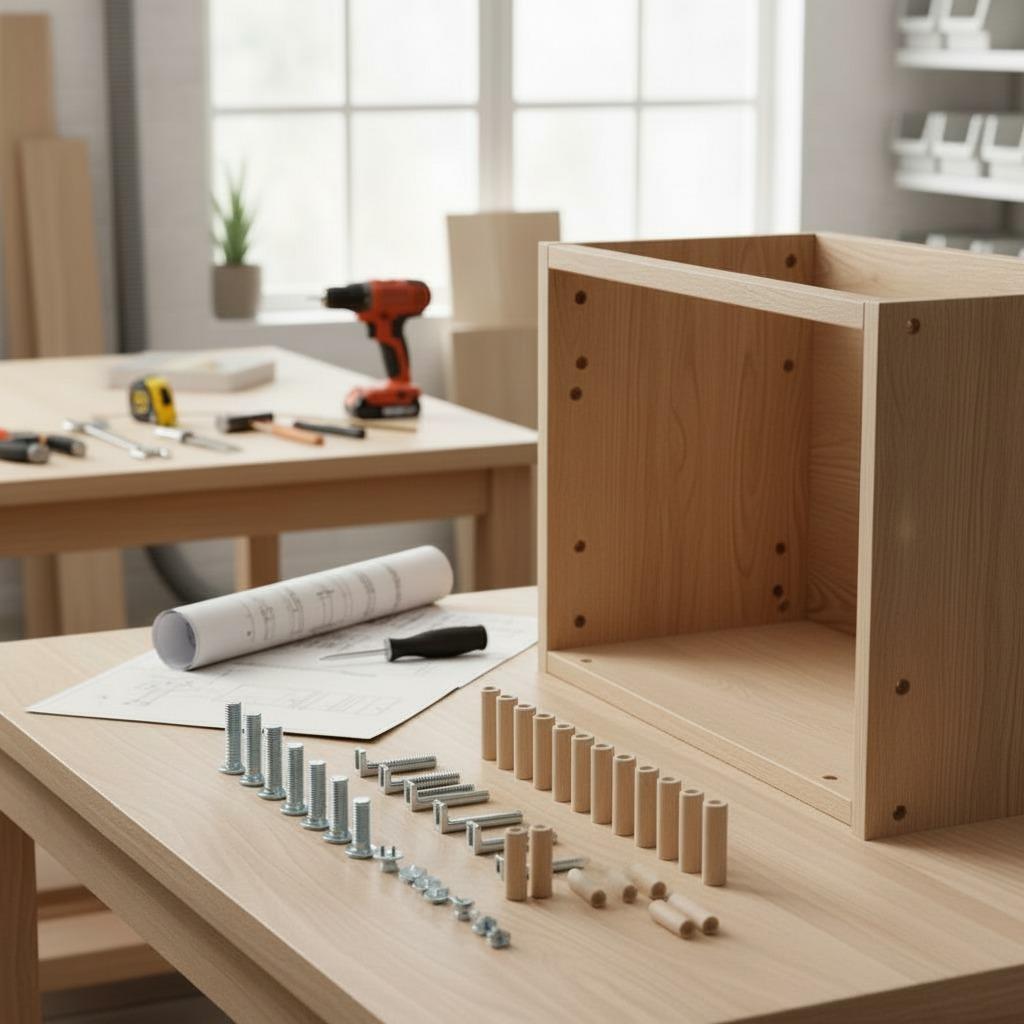
Why cabinet assembly screws deserve more attention than usual?
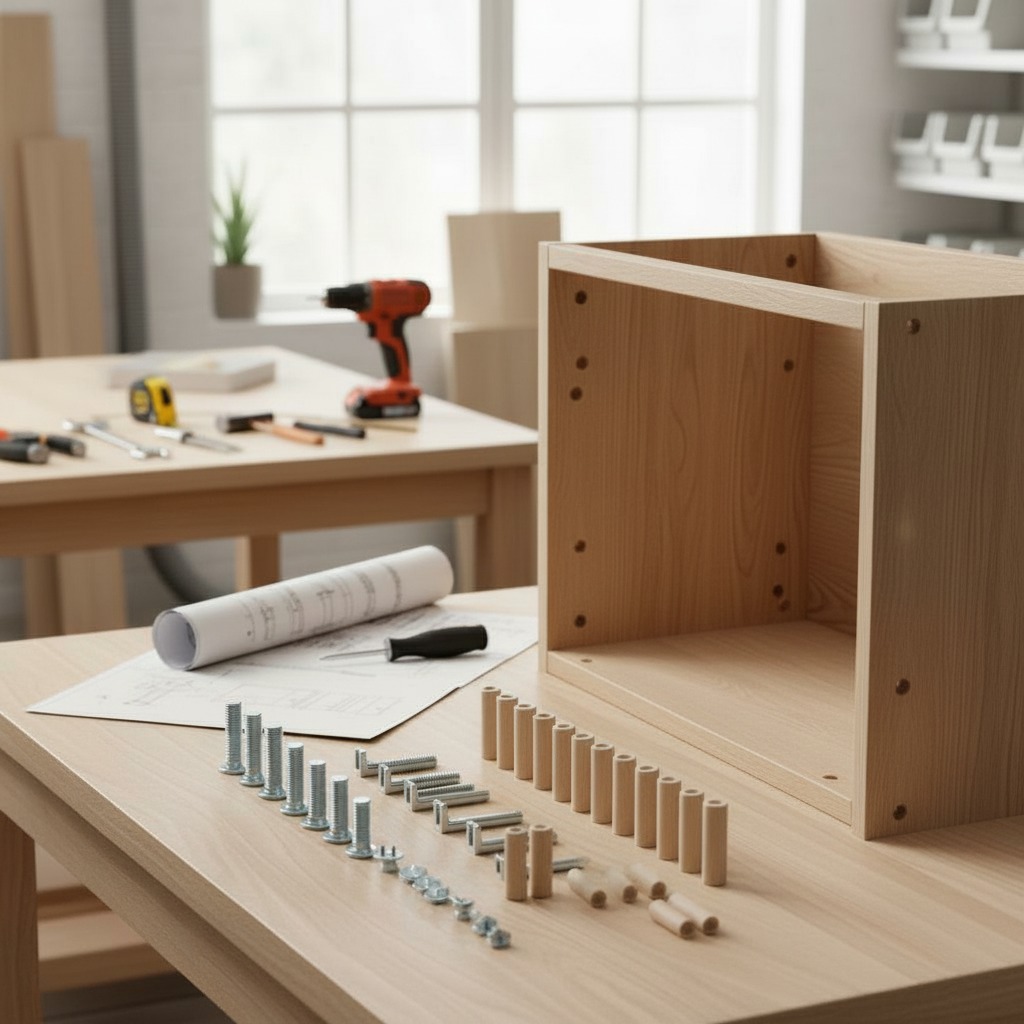
When assembling a flat-panel cabinet goes smoothly, people often attribute the success to the cutting of the panels or the instruction manual. However, the fasteners are actually the key. This is especially true for Phillips head screws. Phillips head screws are still widely used in furniture assembly because they are common, readily available, and perform well in panel structures as long as the screw size and drive mechanism match the installation requirements.
For purchasing managers and product teams, the real issue isn't whether the screws can be screwed into the wood, but whether the fasteners can support repeated assembly, prevent stripping during assembly line production or home assembly, and conform to the product's detachable hardware design philosophy. A slightly misaligned screw can trigger a series of problems: panel misalignment, loose seams, damaged pre-drilled holes, and customer complaints that appear to be cabinet defects but are actually fastener issues.
What assembly method is implied in the cabinet images?
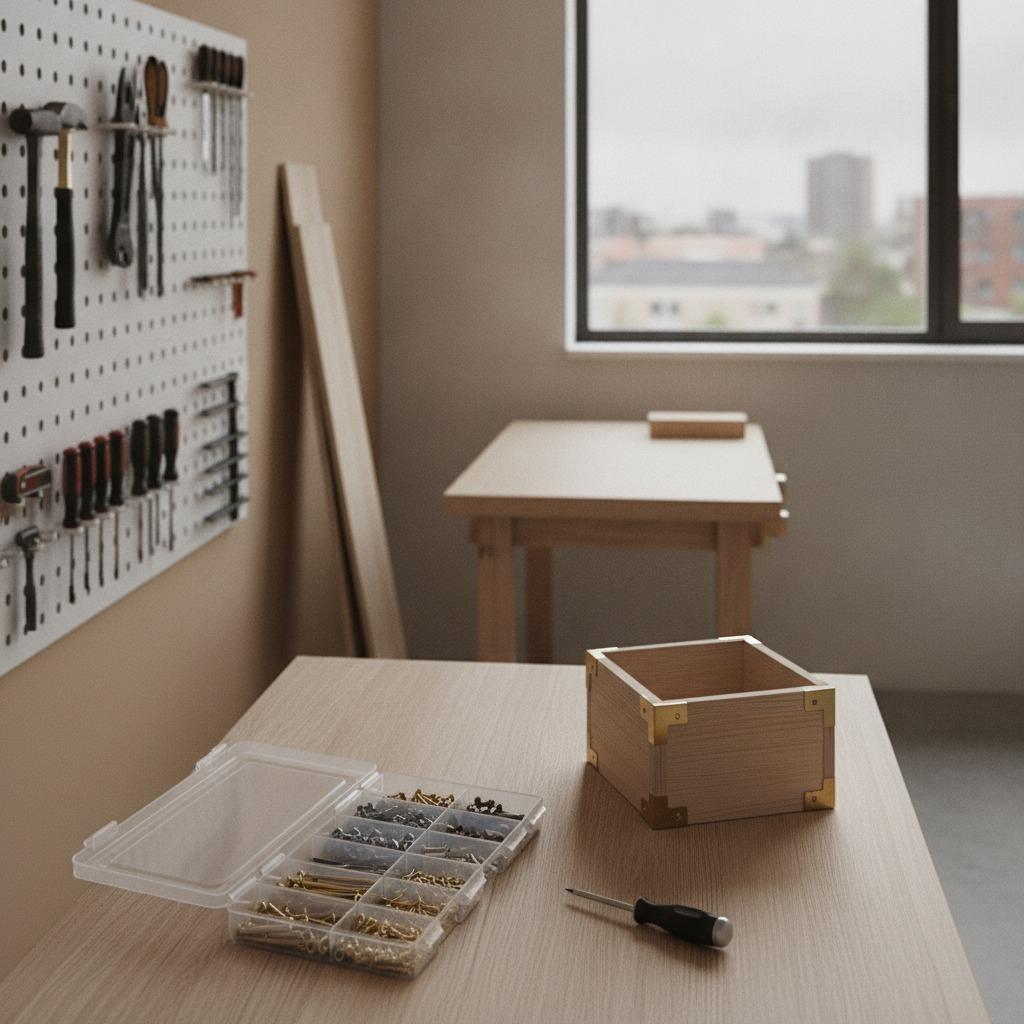
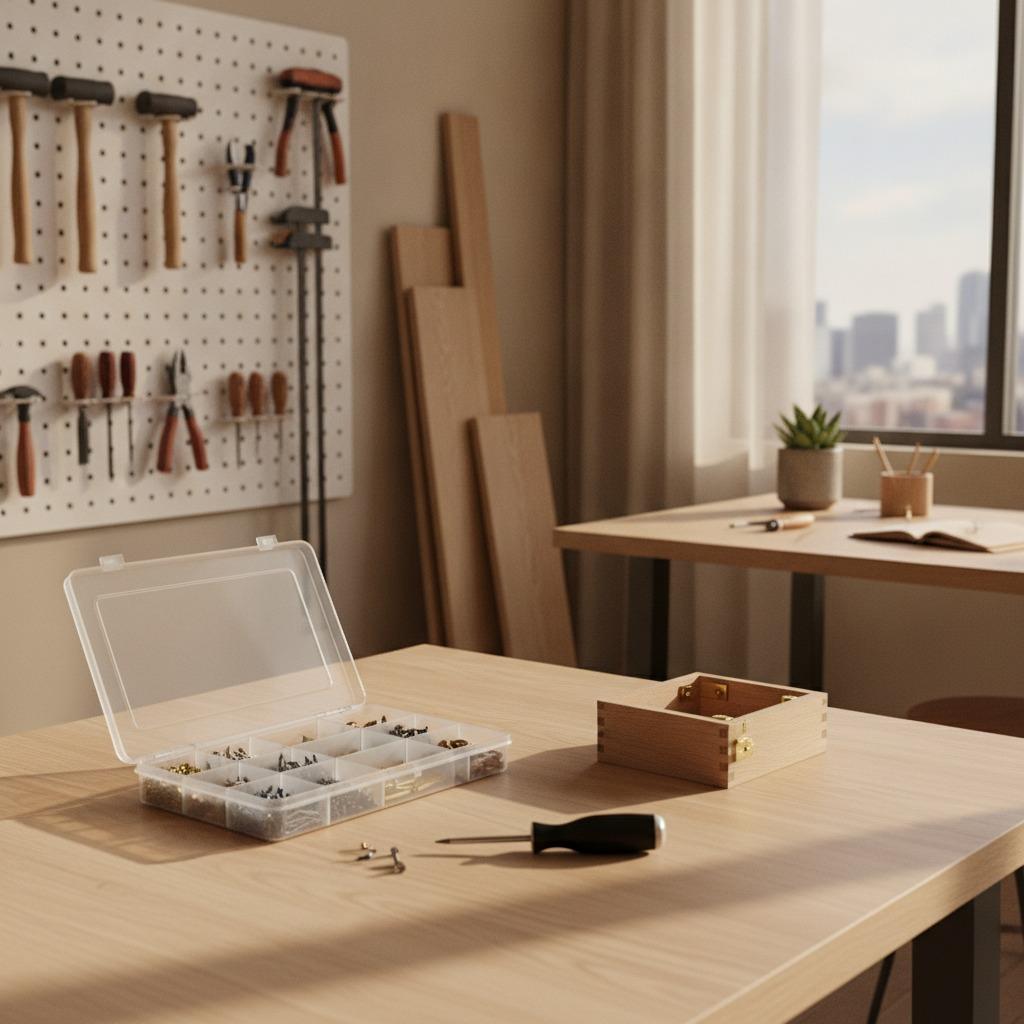
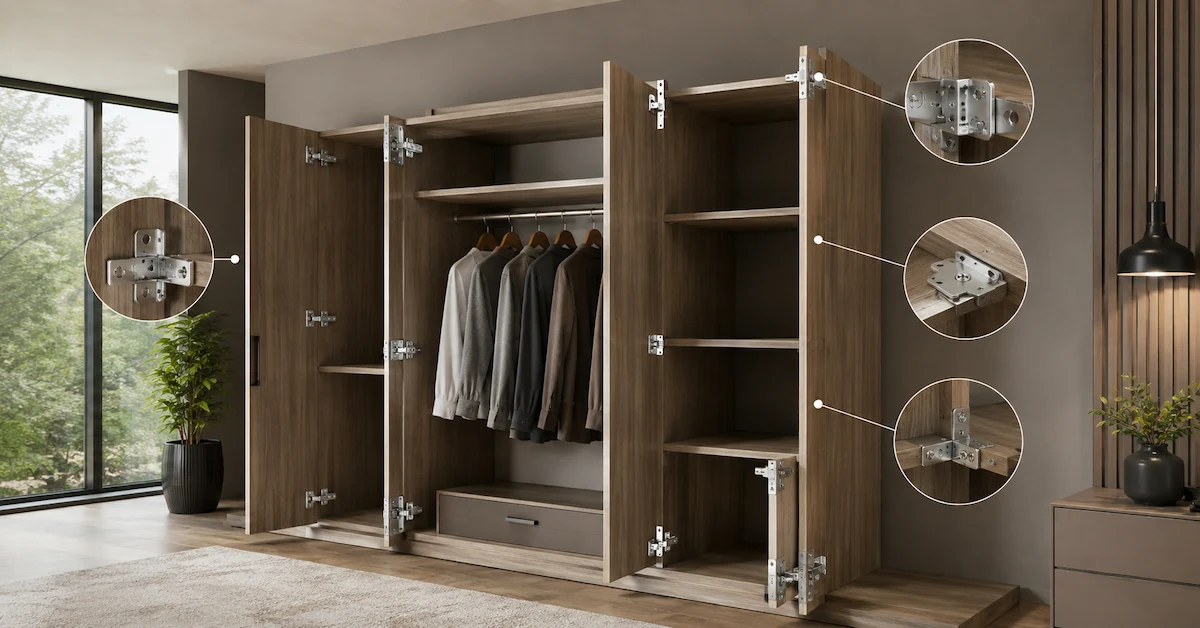
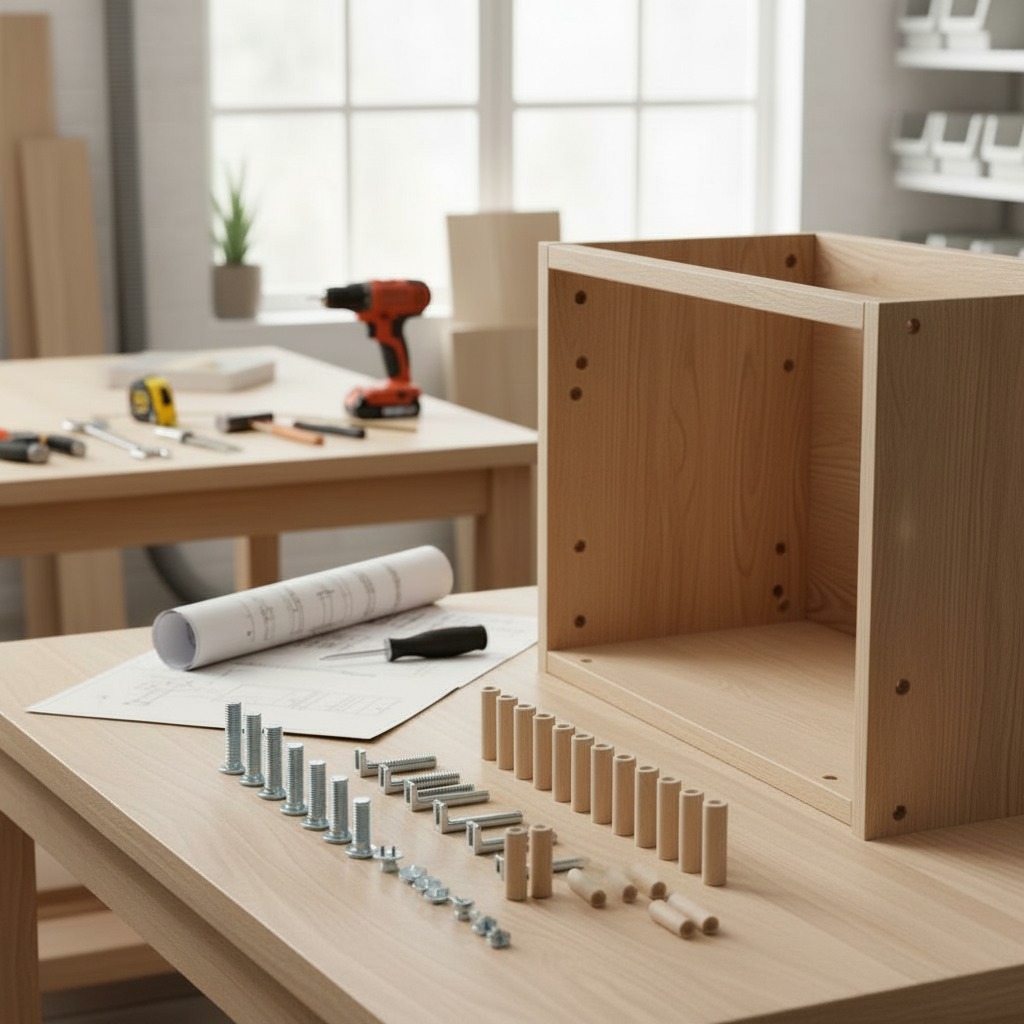
The product shown is a flat-panel cabinet or storage unit assembled from pre-drilled panels. This is crucial because pre-drilling alters the performance of the fasteners. When the panels are CNC-drilled and the connectors are installed at repeatable intervals, the screw is not merely a fastener; it is part of a system that also includes dowels, cam locks, connectors, shelf pins, and sometimes drawer slides.
This is why furniture manufacturers often compare Phillips head screws to other screws, such as slotted screws, star screws, or square head screws. Their goal is not to pursue novelty, but to better control the performance of the screws.
While Phillips head screwdrivers are widely known, they have a practical limitation: they are more prone to stripping than star or square head screwdrivers when torque is increased. In a factory environment, this means more wear on the screwdriver head and less precision in assembly. In a DIY environment, if screws are forced into thick boards or misaligned holes, stripping can occur.
What are the differences in the selection of main fasteners in furniture assembly?
Phillips
This product is ideal for general cabinet assembly where tools and worker skill levels vary. It is well-known and easy to use, but it is not always the best choice for high-torque, repetitive fastening jobs.
Torx and square-headed drivers
These cutting tools are typically chosen by manufacturers when they require better bit engagement and less slippage. For faster assembly lines or thicker plates, they may be a more robust production option.
slotted screws
While still found in some furniture applications, they are generally not well-suited for modern assembly work. They might be acceptable under low torque conditions, but many production teams no longer use them.
Self-tapping cabinet screws
These screws are useful when the design requires components to be directly secured to wood or prefabricated guide members. The term is generally used broadly, so buyers should confirm whether the screws are for particleboard, medium-density fiberboard (MDF), or metal-to-wood connections.
Cabinet machine screws
These are especially important when cabinet systems use threaded inserts, metal brackets, or connectors. It's surprising that they are not interchangeable with wood screws, a distinction that is often overlooked.
What information should buyers verify before selecting screws?
First, consider the substrate. Screws that perform well on solid wood may not perform well on particleboard or medium-density fiberboard (MDF). Second, consider the choice of drive mechanism. If the assembly line or end user may use hand tools, the drive mechanism needs to be able to tolerate improper handling. Third, consider the geometry: thread type, taper style, and length all affect the screw's holding power and risk of pull-out.
For cabinet making, practicality is more important than the descriptions in the product manual. The installation methods of pre-drilled panels, cam-lock systems, and drawer slides all have different impacts on the choice of fasteners. Screws used for side panel connections may not be suitable for installing silver drawer slides, and screws that feel good on a sample panel may still perform poorly in actual production materials.
Common mistakes that cause avoidable quality problems
A common mistake is specifying fasteners based solely on the drive method. Phillips head screws are not a complete specification; buyers still need to define the dimensions, head style, thread type, and base material.
Another issue is the assumption that all wood-based panels have the same properties. Exposed particleboard edges, laminated core material, and veneer all affect how screws engage and the amount of material left before the panel cracks or is pulled out.
The third mistake is underestimating the assembly environment. If furniture is sold as a disassembly kit, the end user might overtighten the screws, use the wrong angle, or use the wrong screwdriver bit. In this case, well-designed, error-tolerant fasteners and clear instructions become especially important.
What has Jiangmen Jinhe Hardware added to the supply chain landscape?
Jiangmen Jinhe Hardware Co., Ltd. manufactures machine screws, self-tapping screws, miniature screws, and precision screws made of stainless steel, iron, and aluminum. Products conform to GB, DIN, ANSI, BS, JIS, and ISO standards. The company also supports furniture manufacturers, wholesalers, and cross-border retailers, particularly in applications requiring repeatability, documentation, and supply continuity, such as cabinetry and assembled furniture.
For buyers, what truly matters isn't a slogan, but rather a fastener supplier with extensive capabilities in supplying standard parts and non-standard customization, who can help customers match screws to their cabinet designs, rather than forcing designs to fit off-the-shelf parts.
Cabinet project recommendations for buyers
If your product line uses panel furniture, request samples that reflect the actual panel material, not generic test blocks. Check the feel of installation, the engagement of screw heads, and whether the screws ensure smooth assembly later on. If you are comparing Phillips head screws, star head screws, or square head screws, be sure to compare them in an actual production environment.
For OEM cabinet kits, the safest approach is to treat fasteners as part of the system: panel drilling, connectors, drawer slides, packaging, and assembly instructions all need to be consistent. This is why subtle differences in screw selection become apparent in practical applications.
Next step
If you are looking for fasteners for cabinet manufacturing, panel furniture, or replacing hardware, first check the panel material, drive type, and assembly method before requesting matching screw specifications. Small-batch sample testing is often more valuable than lengthy discussions.
For technical support or procurement inquiries, please contact Jiangmen Jinhe Hardware Co., Ltd. via: Tel. +86 13729150102, WhatsApp +8613322893939, or email sharon@hkhomeideas.com.