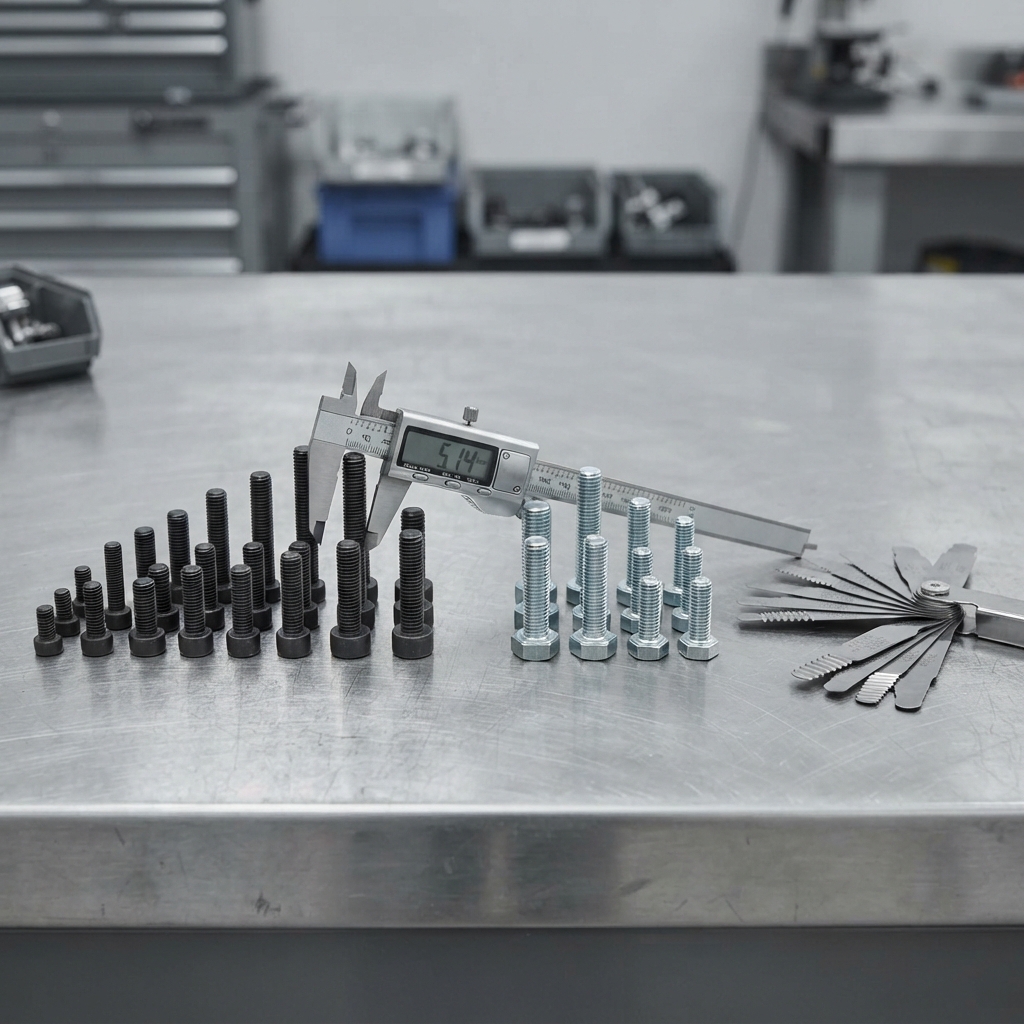


A fastener quote comparison only works when every quote describes the same part, the same quantity and the same scope of supply. Most buyers compare the unit price first; the suppliers who understand this write the shortest quote, and the cheapest line is often the one with the most exclusions behind it. The practical method is to fix the technical baseline, then convert every offer to a landed cost per 1,000 pieces.
Why two quotes for the same drawing are rarely the same quote
Send one drawing to five screw manufacturers and you will usually get five different documents. One returns a single number per piece. One returns a price with a tooling line, a plating lot charge and a note that freight is excluded. One asks three questions before quoting. One quotes a slightly different wire diameter because that is what the machine is set up for. One quotes a standard part that is close enough to look like your drawing.
None of these suppliers is necessarily dishonest. They are answering different questions. A quote is a compressed description of a manufacturing route, and the route depends on quantity, material availability, plating batch size, inspection level and packing method. In a fastener quote comparison, the unit price is therefore the least reliable number on the page, because it is the number most easily detached from its assumptions.
The consequence appears later: at first article, at incoming inspection, or when a reorder arrives at a price that no longer matches the original. The purpose of a structured comparison is to move those assumptions into the open before the purchase order is released.
Seven fields that must match before any fastener quote comparison
Before any arithmetic, check that the offers describe the same item. If a field is missing from a quote, that is not a detail to settle later; it is an unquantified risk. The table below lists the fields that change price and performance most often in custom screw programs.
| Field | What to confirm on the quote | What goes wrong if it is vague |
|---|---|---|
| Part definition | Head type, drive, thread form, point, length and the measurement datum used | Suppliers quote different geometry that assembles differently |
| Material and grade | Wire or bar specification, grade, and whether mill certificates are included | Substitution changes strength, formability and corrosion behavior |
| Dimensions and tolerance | Thread class, dimensional tolerances and the inspection gauge basis | Batch fit problems and rejected lots at incoming inspection |
| Finish | Coating type, coating thickness class and the standard it is measured against | Corrosion failures in transit or in service; plating rework cost |
| Quantity basis | Order quantity per line, MOQ per specification, and price breaks | Comparing a 10,000-piece price with a 100,000-piece price |
| Scope of supply | Tooling, samples, inspection reports, packing, freight, duties and tax | The "cheap" quote becomes the expensive landed cost |
| Commercial terms | Incoterm, currency, payment schedule and price validity period | Price moves before the PO is issued; FX and freight risk land on the buyer |
A screw quotation that cannot answer these seven points is not ready to be compared. Asking for the missing fields is normal procurement practice, and the speed and quality of the answer is itself useful evidence about the supplier.
How to read a custom screw quote, line by line
Custom screws are made through a sequence of operations, and a well-built quote mirrors that sequence. The exact line names differ between factories, but the cost logic is consistent. A screw price breakdown that maps to real process steps tells you which numbers should move with quantity and which should not.
| Quote line | What it pays for | How it should behave when quantity rises |
|---|---|---|
| Material | Wire or bar at the quoted grade, including mill lot minimums and scrap allowance | Falls modestly; material is the most linear cost in the quote |
| Heading and setup | Cold heading machine time plus the setup hours to install and tune dies | Setup is absorbed across the run; per-piece cost falls sharply at low volumes |
| Thread rolling or tapping | Secondary operation time and tool wear | Broadly linear, with a step change when a second machine is needed |
| Secondary operations | Drilling, slotting, shaving, assembling with washers or seals | Linear, but each added operation carries its own setup |
| Heat treatment | Furnace batch for the required property class | Quoted as a batch charge; small lots pay the same furnace load |
| Plating or coating | Barrel or rack load, chemicals, and the lot charge for the finishing house | Batch-driven; a small lot can pay a full barrel charge |
| Sorting and inspection | 100% sorting where required, AQL sampling, dimensional and functional checks | Linear in labor; increases with tighter inspection levels |
| Packaging | Bags, boxes, labels, count accuracy control, cartons | Linear per pack, with setup for printed or custom-packed formats |
| Tooling | Heading dies, thread rolling dies, punch tooling, molds | One-off or amortized; ownership and amortization must be stated |
| Freight and documentation | Inland haulage, export clearance, main carriage, certificates | Driven by weight and carton efficiency, not by piece count |
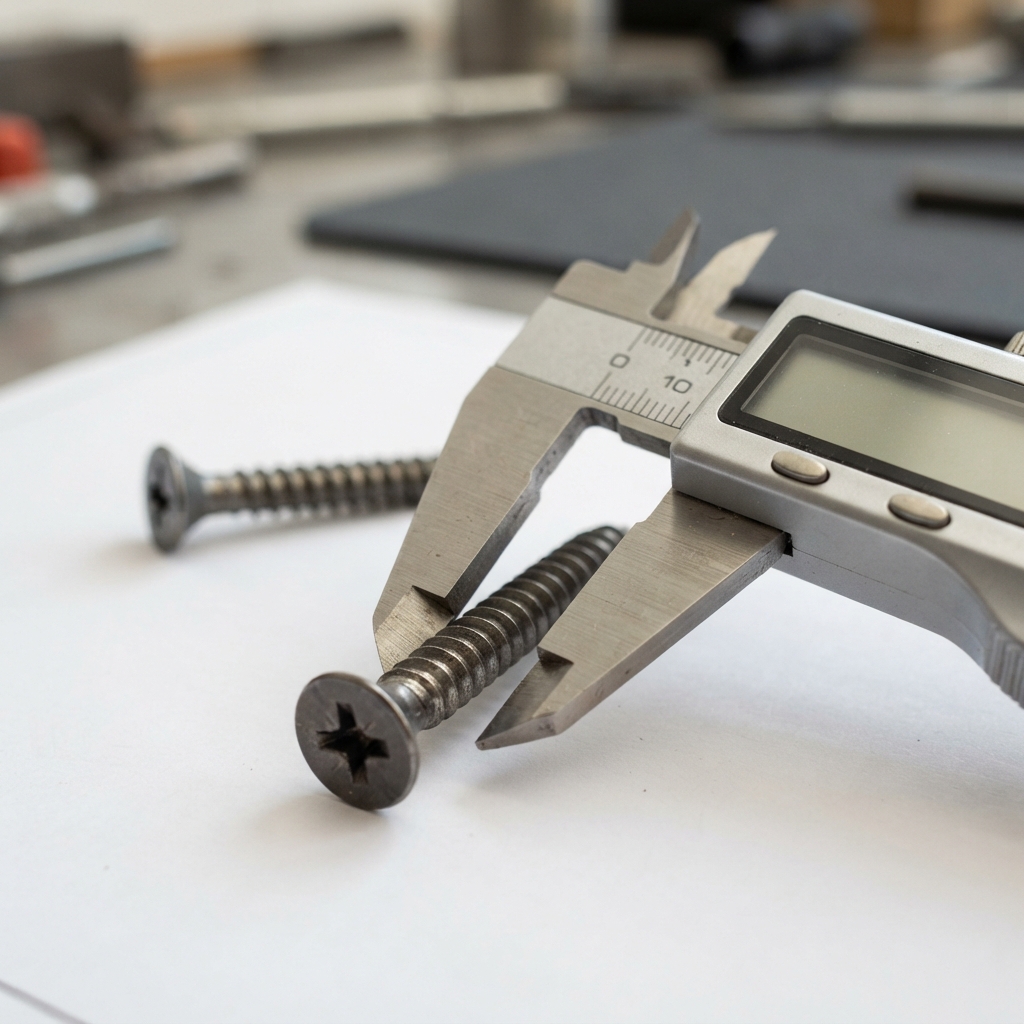
Quote normalization: fixed, batch and variable costs
Quote normalization is the step most buyers skip, and it is the step that decides whether the comparison is real. Separate each line into one of three behaviors. Variable costs move with piece count: material, machine time, sorting labor, packing. Batch costs are fixed per production run: die setup, furnace load, plating barrel or rack charge. One-off costs are paid once: tooling, artwork, approval samples.
Batch and one-off costs explain most quote confusion. When one supplier quotes 5,000 pieces and another quotes 50,000, the second per-piece price is lower for structural reasons, not because the factory is more efficient. Comparing them directly is a category error. Ask every supplier for an MOQ ladder — the same part priced at three quantity levels — so the fixed-cost curve is visible instead of implied.
This is also why MOQ deserves its own line in the comparison. A supplier that quotes a low unit price at a high minimum may cost more per year than a supplier with a higher unit price at a workable minimum, because the excess stock carries cash, storage and obsolescence cost. The logic behind minimum quantities, and how to structure a first order around them, is covered in our guide to custom screw MOQ and trial orders.
Worked example: converting two quotes to landed cost per 1,000 pieces
The example below is illustrative, with round numbers chosen to show the method rather than to represent any supplier's pricing. Both offers are for the same drawing at 100,000 pieces per year.
| Cost element, per 1,000 pieces | Supplier A | Supplier B |
|---|---|---|
| Unit price | USD 18.00 | USD 23.50 |
| Tooling, amortized over year one | USD 6.00 | Included |
| Export packing | USD 1.20 | USD 0.80 |
| Freight to destination | USD 2.80 | USD 2.20 |
| Inspection report | USD 0.50 | Included |
| Landed cost per 1,000 pieces | USD 28.50 | USD 26.50 |
| Annual cost at 100,000 pieces | USD 2,850 | USD 2,650 |
Supplier A's unit price is about 23% lower. Delivered, it is roughly 8% higher. The gap is not caused by dishonesty; it is caused by scope that was left outside the unit price. At lower annual volumes the same effect gets larger, because tooling and freight are spread over fewer pieces. This is why a fastener quote comparison that stops at the unit price systematically favors the supplier who disclosed the least.
What a quote reveals about whether the supplier read your drawing
This is the part buyers underuse. The content of a quote is evidence of how the supplier works. A factory that has actually reviewed your drawing will raise specific points, because custom fasteners almost always contain at least one ambiguity worth resolving.
| Signal in the quote | What it usually means |
|---|---|
| Questions about substrate, pilot hole, mating part or assembly torque | The supplier is thinking about function, not only dimensions |
| A stated thread class, tolerance basis and gauge method | They know how the part will be inspected and accepted |
| Separate tooling line with ownership and amortization terms | Cost structure is transparent and the tool is treated as an asset |
| Plating standard and thickness class named, not just "zinc plated" | Finish is specified, so corrosion performance is testable |
| Price breaks with the quantity basis explicitly stated | The number is calculated, not guessed |
| Only a unit price, no scope, no validity, no payment terms | Likely a template response; the price may not survive contact with production |
| A price far below every other offer with no explanation | Material, coating thickness, sorting or inspection scope has probably been removed |
| Refusal to quote tooling separately or to state tool ownership | A future switching cost is being created for you |
None of these signals is conclusive on its own. A short quote can come from a supplier who simply knows the part well. But when a supplier cannot explain how the price was built, the buyer has no way to audit it later, and no basis for a fair discussion when a reorder price changes. In a fastener quote comparison, those gaps are not neutral: they are cost that has been deferred, not removed.
The costs buyers most often leave out
Tooling amortization and ownership. Heading dies, thread rolling dies and punch tooling are real assets. Whether they are charged once, amortized into the piece price or absorbed, the buyer should know who owns them and what happens if the program moves. Our breakdown of fastener tooling cost and ownership covers the three common quoting models.
Plating lot charges. Finishing is usually a batch process. A small order can carry a full barrel or rack charge, which is why the same screw becomes cheaper per piece at a larger quantity. The coating also needs to be defined against a standard, for example ISO 4042:2022 for electroplated coating systems on steel fasteners, so that thickness and corrosion performance can be verified rather than assumed.
Sorting and inspection scope. "Inspection included" can mean a dimensional check on a sample or a 100% sort. Those are different products at different costs. If the drawing has a critical feature, the inspection method and acceptance level belong in the quote, ideally referenced to ISO 2859-1 sampling plans published by ISO so both sides use the same acceptance numbers.
Freight weight and carton efficiency. Fasteners are heavy, and packaging decisions change freight. A carton that is under-filled costs volume; an over-filled carton fails in transit and produces damaged threads and shortages. Count accuracy and carton configuration are commercial issues, not warehouse details.
Documentation, payment terms and price validity. Material certificates, inspection reports and third-party testing may be priced separately. Payment schedule, currency and price validity determine who carries risk between quotation and shipment. A 30-day validity on a quote that takes 45 days to produce is a price change waiting to happen.
A practical fastener quote comparison scorecard
Use the same checklist for every offer, and score each item as present, partial or missing. The supplier with the most complete answers is usually also the one whose price will hold.
- Drawing revision number referenced on the quote
- Material grade and certificate availability stated
- Thread class, tolerance and gauge basis stated
- Finish standard and thickness class stated
- Quantity basis and price breaks stated per line
- Tooling cost, ownership and amortization stated separately
- Inspection level, sampling basis and report format stated
- Packing format, count per pack and carton specification stated
- Incoterm, freight scope, currency and validity stated
- Payment schedule and sample charge policy stated
- Lead time expressed as milestones, not a single number
Milestone-based lead times are worth insisting on. A single "25 days" hides whether tooling, material, plating or inspection is the constraint. Our article on verifying a custom screw lead time shows how to test a delivery date before the order is placed.
Common mistakes in fastener quote comparison
Comparing different quantities. The most frequent error, and the easiest to fix: ask every supplier for the same three quantity levels and keep the comparison on one page.
Treating "included" as free. Packing, inspection and freight that appear inside the unit price are still being paid for; the question is whether the scope behind them matches.
Ignoring the sample and approval path. A quote that does not mention sample cost, sample lead time and approval criteria leaves the most schedule-sensitive step unpriced. The checks worth running before approving samples are set out in our custom screw sample approval checklist.
Negotiating before normalizing. Once the technical baseline is fixed, price discussions become specific and short. Before that, they are arguments about different products.
Accepting a quote with no validity date. Steel, plating chemicals and freight all move. A quote without a validity period is an opening position, not a commitment.
How we build a custom screw quote at JHFIX
Jiangmen Jinhe Hardware Products Co., Ltd. has manufactured fasteners since 2004 in Jiangmen, Guangdong, and our export partner Jiangmen Shenxin Trading Co., Ltd. handles international sales and export coordination for buyers in more than 40 countries. Our workshops cover cold heading, tapping, punching, injection molding, assembly and packing, with a dedicated inspection room, so the operations in a quote correspond to processes we run ourselves rather than to a trading margin on an unknown source.
When a buyer sends a drawing or a sample, we review substrate, pilot hole, thread engagement, head seating, material, finish and packing before pricing, and we quote tooling, inspection and packing as visible lines rather than folding them into a unit price. Two examples of what that looks like in practice:
- The silver cross-drive countersunk self-tapping screw is quoted as a pointed countersunk screw with cross recess and coarse full-length thread. Thread sizes from M1 to M12 and lengths from 3 mm to 200 mm can be reviewed against the drawing, with finishes including zinc plating, Ruspert coating, electrophoretic coating, blackening and plated color options, and packing as bulk cartons, counted packs or project kits.
- The yellow-coated coarse-thread deck screw assortment is supplied as a mixed-length range from 1.5 in to 4 in in #8, #9 and #10 thread sizes, with the screw mix, finish, counted packs and contractor cartons defined per order.
For buyers building a first RFQ, the field-by-field structure in our screw RFQ checklist reduces the number of quotation rounds, because most delays come from missing application information rather than from pricing.
FAQ
How many quotes should I collect for a custom screw?
Three is usually enough to establish a market range, provided all three quote the same quantity levels and the same scope. More quotes add administrative work without adding much information once the specification is fixed.
Why is one quote much cheaper than the others?
Common reasons are a lower material grade, a thinner coating, no sorting or inspection scope, a different quantity basis, or freight excluded. Ask for the scope in writing before treating the price as comparable.
Should tooling be paid separately or amortized into the piece price?
Both are workable. Paying separately is clearer when you may move the program or need to know the tool's value; amortizing spreads cash flow but hides the asset. Whichever is used, the quote should state who owns the tool.
What does a complete quote include besides the unit price?
Drawing revision, material grade, tolerance and gauge basis, finish standard, quantity basis and price breaks, tooling terms, inspection level, packing format, Incoterm, freight scope, currency, validity, payment schedule and lead time milestones.
How do I compare quotes in different currencies and Incoterms?
Convert both to a delivered basis at the same destination, using the same freight and duty assumptions, and note the exchange rate and date used. Comparing FOB and DDP prices directly overstates the difference in either direction.
Is a low MOQ a sign of a flexible supplier?
Not by itself. A low minimum may mean the supplier is willing to absorb setup cost, or that the part will be made on a route with higher per-piece cost. Compare the total cost of the first year, not the minimum alone.
What should I do if a supplier will not break down the price?
Ask for the scope rather than the cost structure: what is included in tooling, inspection, packing and freight. A supplier can keep its internal cost model private and still be transparent about scope, and scope is what the comparison needs.
Conclusion
A fastener quote comparison is a specification exercise before it is a price exercise. Fix the seven baseline fields, map each line of the quote to a real process step, convert everything to landed cost per 1,000 pieces, and read the gaps in the document as evidence about how the supplier works. Buyers who do this stop choosing between prices and start choosing between production routes, which is the decision that actually determines cost.
If you are comparing offers for a custom screw, send the drawing, the annual quantity and the destination to our team through the contact page, and we will quote tooling, inspection and packing as separate lines so the comparison is straightforward.