
How to Choose a Reliable Furniture Connector Supplier for Manufacturing
Furniture connectors are essential components in modern furniture production. For cabinet manufacturers, flat-pack furniture brands, and OEM furniture factories, selecting a reliable furniture connector supplier directly affects assembly efficiency, product stability, and customer experience.
A suitable supplier should provide more than individual hardware parts. A professional furniture connector partner should understand furniture structures, connection methods, manufacturing requirements, quality control, and customized production needs.
The right supplier can help furniture manufacturers achieve:
- Consistent connector quality across production batches
- Smooth furniture assembly processes
- Reduced installation problems
- Better supply chain management
- Customized hardware solutions for different furniture designs
When sourcing furniture connectors, buyers should evaluate not only product prices but also technical capability, manufacturing experience, product compatibility, and long-term cooperation potential.
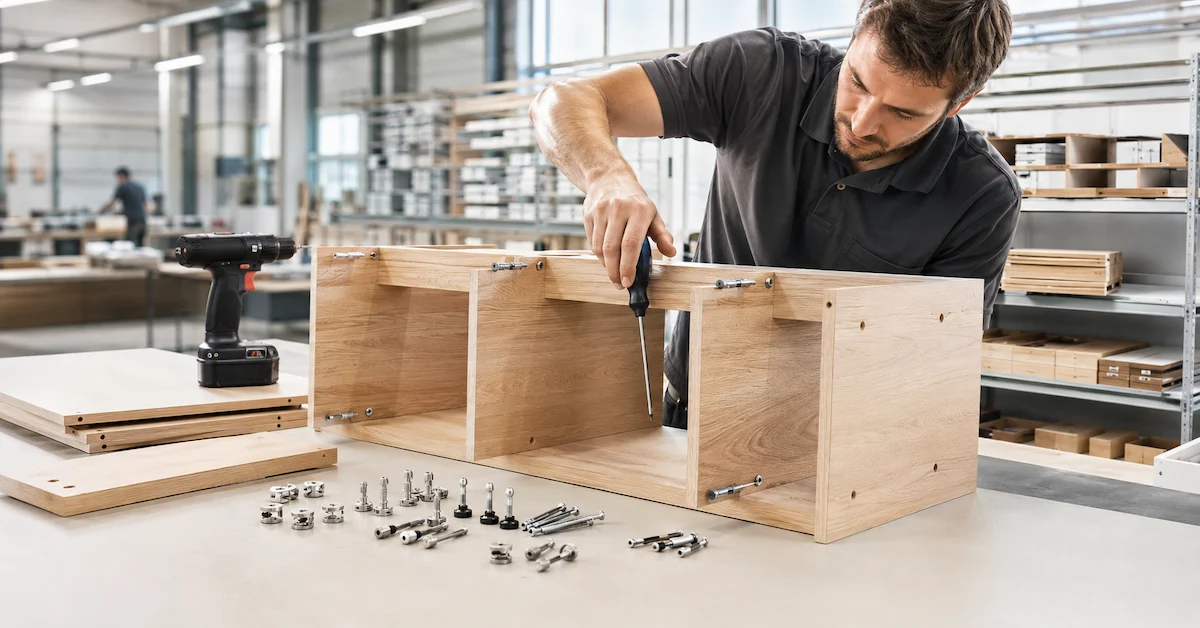
What Does a Furniture Connector Supplier Provide?
A furniture connector supplier provides hardware components used to join furniture panels, frames, and structural parts.
Unlike general fastener suppliers, furniture connector suppliers focus on connection systems designed for furniture applications.
Typical products include:
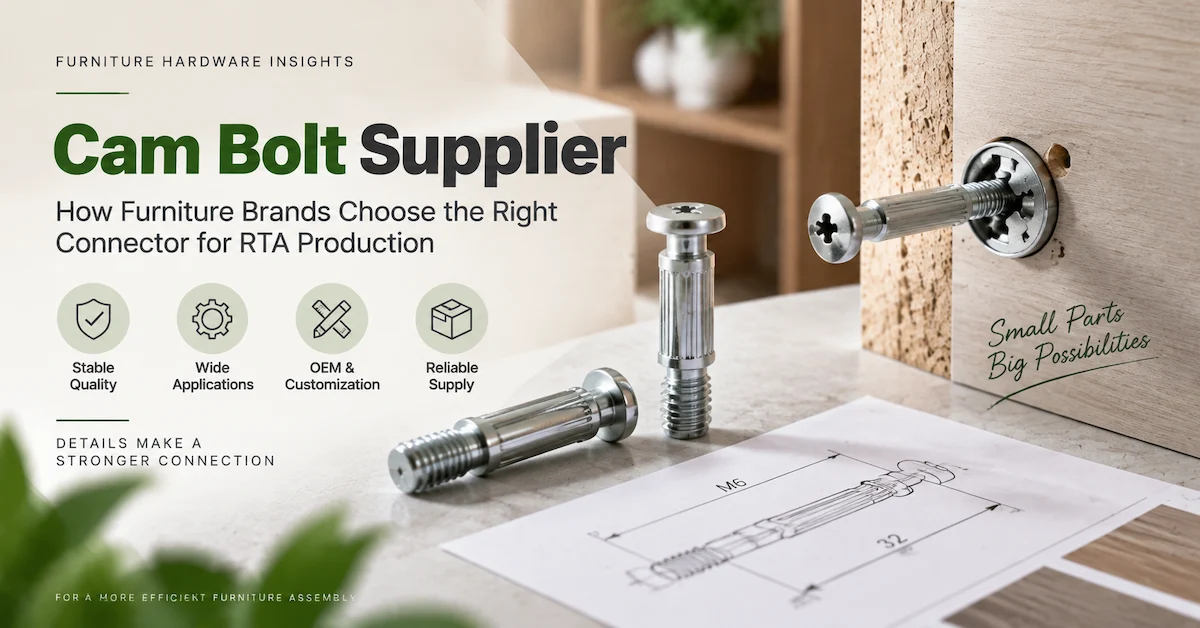
- Cam lock connectors
- Connecting bolts
- Eccentric cam fittings
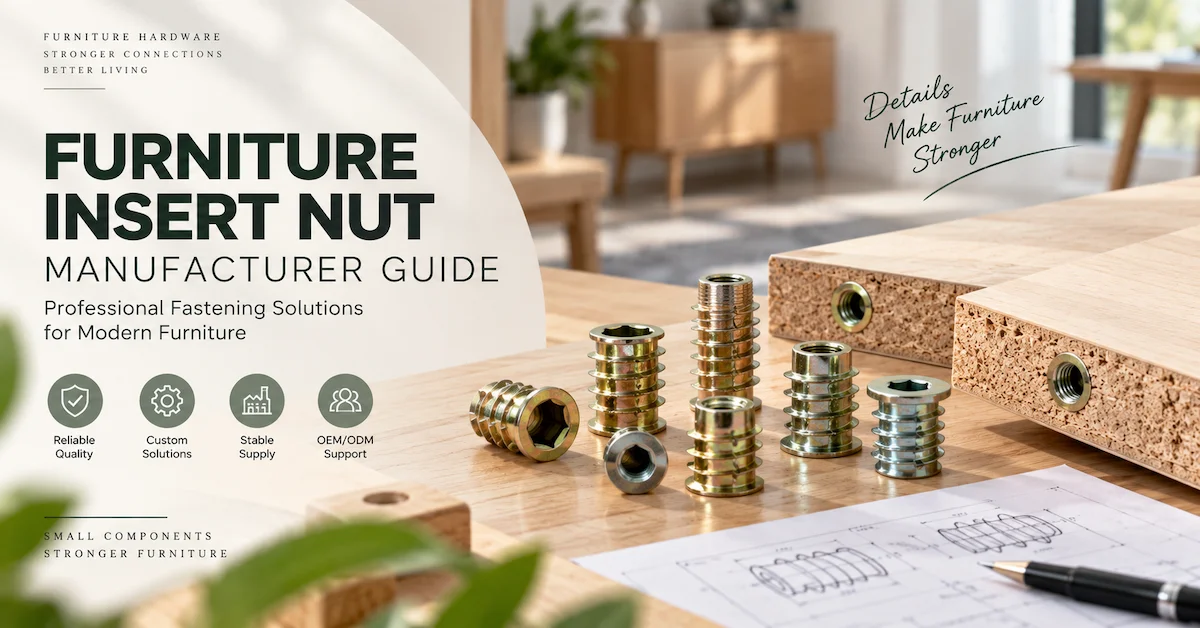
- Insert nuts
- Furniture screws
- Shelf supports
- Metal brackets
- Custom furniture fittings
These components are commonly used in:
- Kitchen cabinets
- Wardrobes
- Bedroom furniture
- Office furniture
- Shelving systems
- Modular furniture
- Flat-pack furniture
- RTA furniture
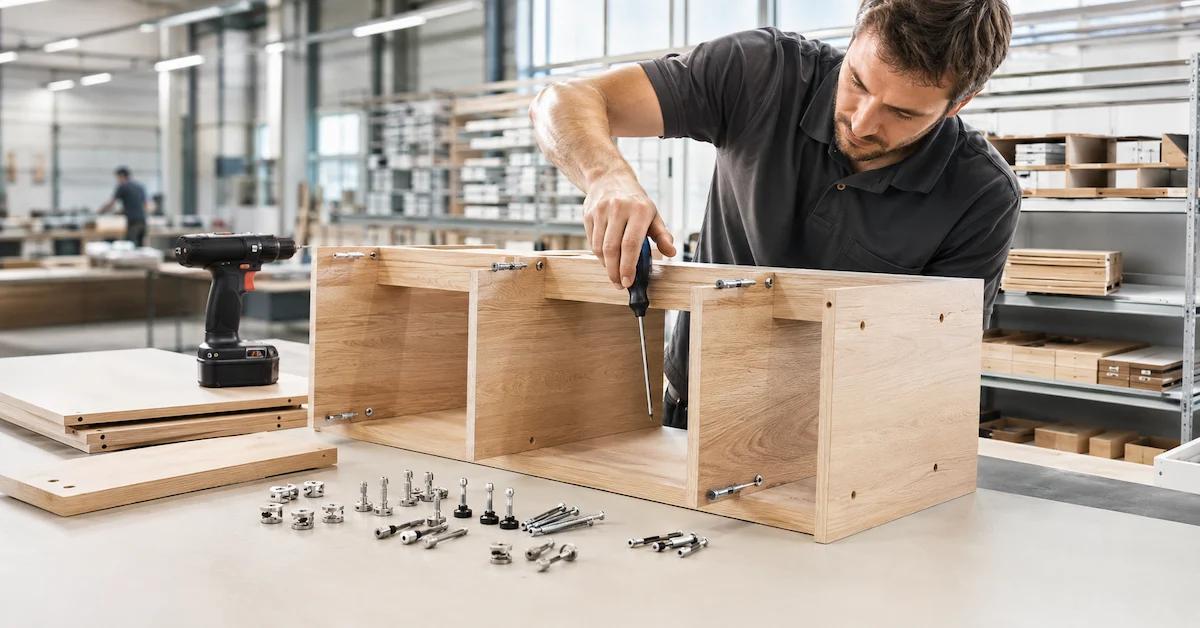
A reliable supplier should understand how each component works within the complete furniture assembly system.
For example, a cam lock should be evaluated together with its connecting bolt, drilling requirements, panel thickness, and assembly method rather than purchased as a standalone item.
JHFIX provides furniture hardware solutions including connectors, screws, nuts, and related components for global furniture manufacturing applications.
Who Needs a Furniture Connector Supplier?
The main buyers searching for furniture connector supplier are usually B2B customers with ongoing production requirements.
Furniture Manufacturers
Furniture factories require stable connector supply for:
- Cabinets
- Tables
- Beds
- Wardrobes
- Storage furniture
Their main concerns include:
- Consistent dimensions
- Reliable quality
- Production efficiency
- Repeat-order stability
Cabinet Manufacturers
Cabinet factories commonly use:
- Cam locks
- Connector bolts
- Shelf supports
- Screws
- Insert nuts
Important requirements include:
- Panel compatibility
- Easy installation
- Concealed connection
- Appearance consistency
Flat-Pack Furniture Brands
Flat-pack furniture companies require hardware that supports:
- Easy assembly
- Compact packaging
- Accurate installation instructions
- Reduced customer complaints
Connector systems must work reliably throughout transportation, storage, and final assembly.
Furniture Distributors and Retail Brands
Distributors often need:
- Multiple hardware models
- Stable supply
- Packaging options
- Private-label solutions
A supplier with a wider product range can simplify purchasing management.
Main Types of Furniture Connectors
Different furniture designs require different connector solutions.
Cam Lock Connectors
Cam locks are among the most commonly used furniture connectors for detachable furniture structures.
A typical cam lock system includes:
- Eccentric cam
- Connecting bolt
- Pre-drilled furniture panels
During installation, the rotating cam pulls the connecting bolt and creates a secure joint.
Common applications include:
- Cabinets
- Wardrobes
- Shelves
- Flat-pack furniture
- Office furniture
When choosing cam lock connectors, buyers should consider:
| Factor | Importance |
|---|---|
| Cam diameter | Determines compatibility |
| Bolt length | Affects panel connection |
| Panel thickness | Influences drilling requirements |
| Material | Affects durability and cost |
| Surface finish | Affects appearance and protection |
A professional furniture connector supplier should provide matched connector systems rather than isolated components.
Connecting Bolts
Connecting bolts are usually paired with cam locks or other furniture connection systems.
Key specifications include:
- Diameter
- Length
- Thread design
- Head type
- Material
- Surface finish
Incorrect bolt selection may result in:
- Loose joints
- Difficult installation
- Poor alignment
- Reduced furniture stability
Suppliers should evaluate the entire connection structure before recommending products.
Insert Nuts
Insert nuts provide internal threads inside furniture panels and components.
They are useful for furniture requiring:
- Repeated assembly
- Removable structures
- Strong threaded connections
Common applications include:
- Beds
- Tables
- Cabinets
- Modular furniture
Selection factors include:
- Thread size
- Outer design
- Installation method
- Panel material
- Matching bolt specification
Furniture Screws
Furniture connectors often work together with different screw types.
Common supporting screws include:
- Wood screws
- Self-tapping screws
- Machine screws
- Assembly screws
A complete furniture hardware system may combine:
- Connectors
- Screws
- Nuts
- Brackets
- Plastic accessories
JHFIX supplies various furniture screws and hardware components for OEM applications.
How to Evaluate a Furniture Connector Supplier
Choosing a supplier requires evaluating both product capability and manufacturing capability.
Product Range and Compatibility
A reliable supplier should offer products that cover different furniture requirements.
Important categories include:
- Furniture connectors
- Cam lock systems
- Screws
- Nuts
- Brackets
- Custom hardware
A broader product range can reduce the need to manage multiple suppliers.
JHFIX provides a range of furniture hardware products for different furniture applications.
Manufacturing Capability
A professional supplier should understand manufacturing processes required for furniture hardware.
Relevant capabilities may include:
- Cold heading
- Tapping
- Stamping
- Injection molding
- Assembly
- Packaging
- Inspection
These capabilities help maintain consistency from raw materials to finished products.
JHFIX describes its manufacturing capabilities including cold heading, tapping, stamping, injection molding, assembly, packing, and inspection processes on its About Us page.
Engineering Support
Furniture connector sourcing often requires technical communication.
A capable supplier should help review:
- Drawings
- Samples
- Dimensions
- Material selection
- Connection structure
- Production feasibility
Engineering support is especially important for customized furniture connectors.
Quality Control System
Furniture connectors are small components, but quality issues can affect entire furniture products.
Important QC areas include:
Dimensional Inspection
Checking:
- Diameter
- Length
- Thread dimensions
- Connector size
- Hole position
Functional Testing
Testing should confirm:
- Connector matching
- Assembly performance
- Joint stability
Surface Inspection
Checking:
- Coating appearance
- Scratches
- Burrs
- Surface defects
Packaging Inspection
For furniture hardware kits, inspection should also confirm:
- Correct quantity
- Correct components
- Correct packaging
- Clear labeling
OEM Furniture Connector Solutions
Many furniture brands require customized connectors rather than standard products.
OEM customization may include:
Customized Dimensions
Suppliers may develop connectors according to:
- Drawings
- Samples
- Existing furniture designs
Customization may involve:
- Length
- Diameter
- Thread specification
- Connector geometry
Customized Materials and Finishes
Depending on application requirements, buyers may specify:
- Carbon steel
- Stainless steel
- Zinc alloy
- Different surface finishes
Customized Hardware Kits
For flat-pack furniture, suppliers may provide complete hardware kits including:
- Screws
- Connectors
- Bolts
- Nuts
- Accessories
This helps furniture brands simplify assembly and packaging management.
Custom Packaging
Packaging options may include:
- Bags
- Boxes
- Blister packaging
- Bulk packaging
JHFIX provides different hardware packaging solutions for furniture and OEM projects.
Factors Affecting Furniture Connector Supplier Pricing
The cost of furniture connectors depends on several factors.
| Cost Factor | Influence |
|---|---|
| Material | Different materials affect raw cost |
| Connector design | Complex structures may require additional processing |
| Surface finish | Special finishes increase processing requirements |
| Quantity | Volume affects production efficiency |
| Customization | OEM designs require additional development |
| Packaging | Customized kits affect total supply cost |
A lower product price does not always mean lower purchasing cost.
Furniture manufacturers should also consider:
- Quality consistency
- Assembly efficiency
- Supplier communication
- Packaging accuracy
- Repeat-order stability
Common Mistakes When Choosing Furniture Connector Suppliers
Selecting Only Based on Price
Low-cost hardware may create problems if:
- Dimensions are inconsistent
- Components do not match
- Assembly becomes difficult
Ignoring Connector Compatibility
Furniture connectors should be evaluated as a system.
A cam, bolt, and panel drilling design must work together.
Not Testing Before Mass Production
Sample testing helps identify:
- Installation issues
- Fit problems
- Appearance concerns
Choosing Suppliers Without OEM Capability
Custom furniture projects often require:
- Drawing review
- Product modification
- Packaging support
A supplier without engineering capability may struggle with customized requirements.
Not Considering Long-Term Supply Stability
Furniture production depends on repeat orders.
A stable supplier should maintain:
- Product consistency
- Communication efficiency
- Production reliability
How Furniture Manufacturers Should Prepare an RFQ
A detailed inquiry helps suppliers provide accurate solutions.
Recommended information includes:
- Furniture application
- Product drawings
- Samples
- Connector type
- Dimensions
- Material requirements
- Surface finish
- Quantity
- Packaging requirements
- Target market
For OEM projects, providing the complete furniture assembly information is usually more effective than requesting individual parts separately.
Why Work With a Professional Furniture Connector Supplier?
A professional supplier helps furniture manufacturers reduce sourcing complexity.
Benefits include:
Better Product Matching
Suppliers with furniture hardware experience understand how connectors work together.
More Efficient Development
Engineering support can improve:
- Sample development
- Product modification
- Production preparation
Stable Quality
Manufacturing control helps maintain consistency between production batches.
Simplified Supply Chain
A supplier offering connectors, screws, nuts, and packaging can reduce coordination between multiple vendors.
FAQ
What is a furniture connector supplier?
A furniture connector supplier provides hardware components used for furniture assembly, including cam locks, connector bolts, insert nuts, screws, and customized furniture fittings.
How do I choose the best furniture connector supplier?
Evaluate product range, manufacturing capability, engineering support, quality control, OEM ability, and long-term supply stability.
What furniture uses connector hardware?
Furniture connectors are widely used in cabinets, wardrobes, tables, beds, shelves, office furniture, and flat-pack furniture.
Can furniture connectors be customized?
Yes. Many suppliers can customize connectors based on drawings, samples, dimensions, materials, finishes, and packaging requirements.
What information should I provide for a quotation?
Provide product drawings, application details, dimensions, materials, quantities, surface requirements, and packaging needs.
Are cam locks suitable for flat-pack furniture?
Yes. Cam locks are commonly used for detachable furniture because they provide concealed connections and support efficient assembly.
Why should furniture factories choose an OEM connector supplier?
OEM suppliers can provide customized products, technical support, consistent production, and integrated hardware solutions.
Can a supplier provide complete furniture hardware kits?
Yes. Many furniture hardware suppliers can combine connectors, screws, nuts, and accessories into complete assembly kits.
Conclusion
Choosing the right furniture connector supplier is an important decision for furniture manufacturers that need reliable assembly performance and stable supply.
A professional supplier should provide more than hardware products. The ideal partner should understand furniture structures, connector applications, manufacturing processes, quality control, OEM customization, and packaging requirements.
For cabinet factories, flat-pack furniture brands, and furniture manufacturers, working with the right connector supplier can improve production efficiency, reduce assembly problems, and create more consistent furniture products.
JHFIX provides furniture hardware solutions including connectors, screws, nuts, stamped components, and customized packaging options. Companies looking for reliable furniture connector solutions can contact JHFIX to discuss drawings, samples, and OEM requirements.