
What Is a Cam Bolt Supplier and Why Does It Matter for Furniture Production?
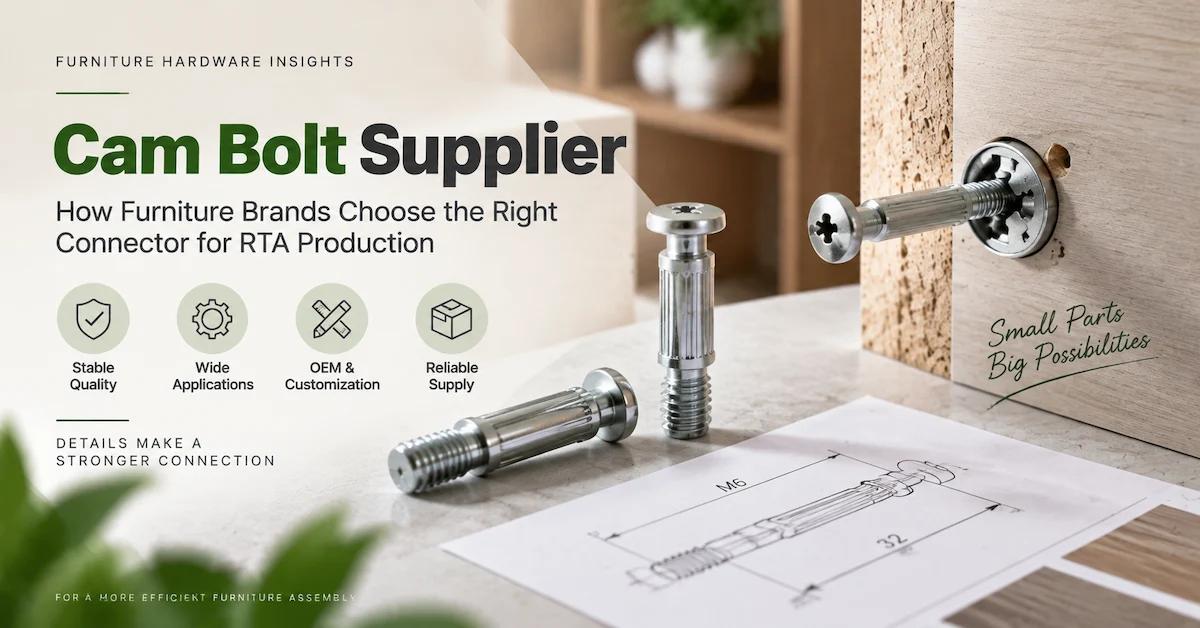
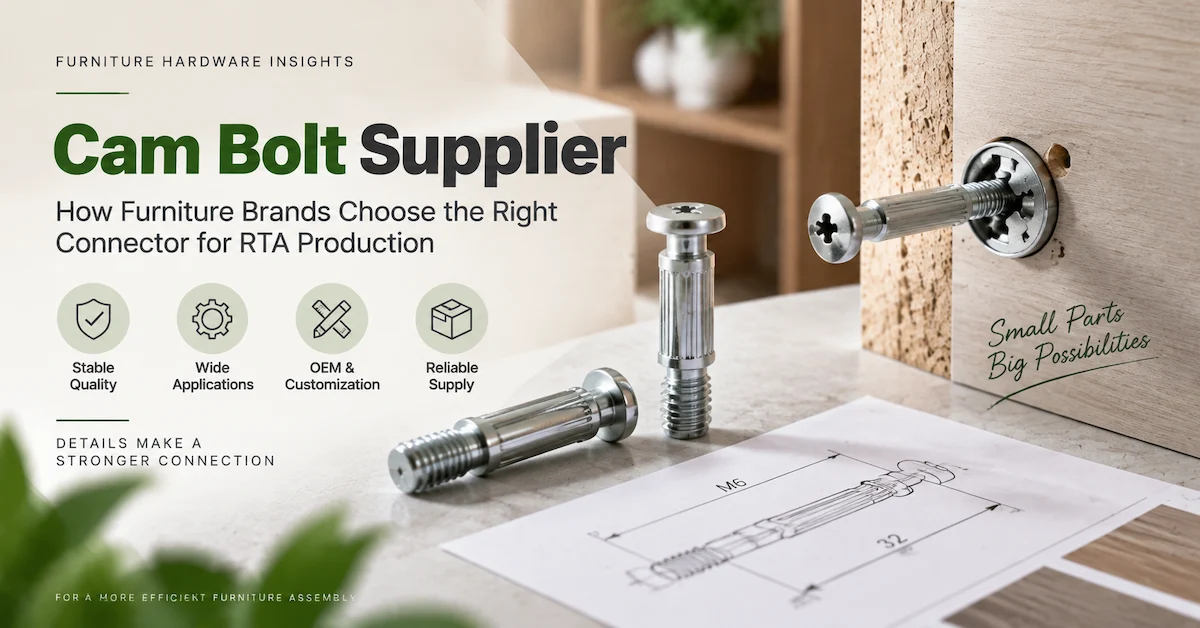
A cam bolt supplier provides one of the key connecting components used in ready-to-assemble (RTA) furniture, cabinet systems, wardrobes, storage furniture, and modular furniture structures. However, professional furniture buyers do not evaluate cam bolts as individual metal parts only. A cam bolt works together with a cam lock, drilled furniture panels, and other connecting components to create a complete assembly system.
For OEM furniture production, the real purchasing requirement is not simply “a bolt with a certain length.” Buyers need a connector solution that can consistently match their furniture design, manufacturing process, and assembly requirements.
A reliable cam bolt supplier should help buyers confirm:
- Compatible cam lock or eccentric connector
- Correct bolt dimensions and installation position
- Suitable material and finish
- Matching panel drilling requirements
- Sample approval before bulk production
- Stable repeat-order supply
JHFIX provides furniture connecting hardware through its Furniture Hardware Products category, including connecting bolts, cam-lock related hardware, and furniture assembly components for OEM applications.
How Do Cam Bolts Work in RTA Furniture Connections?
Cam Bolt and Cam Lock Working Principle
A cam bolt is normally installed into one furniture panel, while a cam lock or eccentric cam is installed into another prepared panel. During assembly, the cam rotates and captures the bolt, pulling the two panels together.
Although the mechanism is simple, the connection depends on multiple factors:
- Bolt head position
- Bolt length
- Cam opening location
- Panel drilling accuracy
- Panel thickness
- Assembly direction
A cam bolt that fits physically into a panel does not always mean it creates the correct furniture joint.
For example, a longer bolt is not necessarily better. If the bolt extends too far or does not align with the cam position, the connector may not lock correctly. Similarly, a bolt with the same diameter may not work if the head shape or mating section differs.
Why Matching Components Matter
Furniture connectors are systems rather than isolated parts.
A complete cam connection normally includes:
| Component | Function |
|---|---|
| Cam bolt | Provides the locking connection point |
| Cam lock | Rotates and captures the bolt |
| Furniture panel | Provides the prepared installation structure |
| Drilling pattern | Determines component positioning |
| Additional hardware | Supports alignment or reinforcement |
JHFIX’s Cam Locks & Connector Sets category includes furniture connector solutions designed around these types of applications.
Before placing a bulk order, buyers should confirm that the cam bolt and matching connector have been tested together rather than approving each part separately.
What Specifications Should Buyers Confirm Before Ordering Cam Bolts?
A common sourcing problem is requesting cam bolts only by size, such as “M6 cam bolt” or “40 mm furniture bolt.” This information may not fully describe the required connection.
A professional RFQ should include the following information:
| Specification Area | Information to Confirm |
|---|---|
| Furniture application | Cabinet, wardrobe, desk, storage unit, or modular furniture |
| Connector type | Cam bolt, connecting bolt, or complete connector set |
| Diameter | Required bolt diameter |
| Length | Measurement reference and installation position |
| Thread details | Thread specification where applicable |
| Head design | Head shape and cam engagement requirement |
| Material | Steel, stainless steel, or specified material |
| Surface finish | Zinc plating, nickel finish, or other requirements |
| Matching cam | Compatible cam lock or eccentric connector |
| Panel thickness | Actual furniture board thickness |
| Drilling information | Hole diameter, depth, and position |
| Quantity | Pieces, sets, or hardware kits |
| Packaging | Bulk supply or pre-packed furniture hardware |
This information allows the supplier to understand the complete application instead of quoting based on incomplete assumptions.
How to Choose a Reliable Cam Bolt Supplier for OEM Furniture Projects?
Evaluate Product Understanding, Not Only Product Range
A supplier may offer many bolt sizes, but furniture buyers need more than a large catalog. The supplier should understand how cam bolts interact with furniture structures.
Useful supplier questions include:
- Can the supplier review furniture drawings?
- Can they evaluate existing samples?
- Can they confirm matching cam components?
- Can they provide assembly samples?
- Can they support repeat-order specifications?
JHFIX’s Furniture Connecting Bolts & Dowels category provides a reference point for buyers evaluating connecting hardware options.
Review Manufacturing and Process Control
Manufacturing capability should connect with the actual product being purchased.
JHFIX introduces its manufacturing capabilities through its About Us page, including hardware production, assembly, inspection, and packaging-related processes.
For cam bolt sourcing, buyers should focus on:
- How bolt dimensions are controlled
- How threads are checked
- How surface finishes are managed
- How production versions are identified
- How approved samples are maintained
A supplier’s equipment list alone does not confirm product consistency. The important point is whether the supplier can explain how the approved specification becomes a repeatable production item.
How Should Cam Bolt Samples Be Approved Before Bulk Production?
Sample approval should include three different stages.
1. Component Inspection
First confirm the individual cam bolt:
- Dimension accuracy
- Material
- Surface finish
- Appearance
- Thread or installation features
2. Assembly Validation
The cam bolt should then be tested with the actual cam lock and representative furniture panels.
Check:
- Bolt engagement
- Cam locking performance
- Panel alignment
- Assembly process
- Installation convenience
JHFIX’s furniture connector guidance recommends reviewing actual boards, drilling conditions, and mating hardware before volume production.
3. Production Approval
Before mass production, confirm:
- Approved sample
- Drawing revision
- Component list
- Packaging specification
- Inspection requirements
This approval process helps prevent situations where a correct-looking bolt creates assembly problems after production begins.
Cam Bolt Applications in Different Furniture Categories
Kitchen Cabinets
Kitchen cabinet manufacturers often require concealed connectors that allow efficient assembly while maintaining a clean appearance.
Important considerations include:
- Cabinet panel thickness
- Connector position
- Assembly sequence
- Repeat production consistency
Wardrobes and Storage Furniture
Wardrobe systems usually involve many repeated connections. A stable cam bolt supply helps maintain consistency across large production volumes.
Buyers should focus on:
- Same specification across batches
- Clear hardware identification
- Matching connector sets
Office and Modular Furniture
Office furniture systems may require frequent assembly and disassembly.
The supplier should understand:
- Modular structure
- Connector replacement requirements
- Installation efficiency
JHFIX’s furniture hardware solutions support various furniture connection applications through its product categories.
How Should Buyers Compare Different Cam Bolt Suppliers?
Supplier comparison should include more than unit price.
| Comparison Area | Buyer Evaluation |
|---|---|
| Product compatibility | Can the bolt match the required cam system? |
| Specification control | Are drawings and revisions managed? |
| Sample support | Can the supplier provide validation samples? |
| Manufacturing control | Are critical dimensions inspected? |
| Packaging ability | Can parts be supplied according to buyer requirements? |
| OEM support | Can customized requirements be reviewed? |
| Communication | Are technical questions answered clearly? |
The lowest quotation may not represent the lowest total cost if the buyer needs additional sorting, testing, replacement, or production adjustments.
How Should Cam Bolt Packaging and Repeat Supply Be Managed?
Cam bolts are small components, and incorrect packing can create significant assembly problems.
Buyers should define:
- Quantity per bag or kit
- Matching cam quantity
- Hardware identification
- Furniture model reference
- Label requirements
- Packaging revision
JHFIX provides Bag Packaging Solutions for hardware products and assembly components.
For RTA furniture brands, pre-packed hardware kits can reduce internal sorting work and make installation easier. However, the supplier and buyer should approve the final packed sample before mass packing.
What OEM Services Should a Cam Bolt Supplier Support?
OEM furniture hardware projects usually begin with customer requirements rather than a standard product selection.
Buyers may provide:
- Existing hardware samples
- Furniture drawings
- Panel information
- Required dimensions
- Material requirements
- Finish requirements
- Quantity forecast
- Packaging requirements
The supplier can then determine whether:
- Existing products meet the requirement
- Minor adjustments are needed
- Custom development is required
JHFIX supports furniture hardware customization discussions through its product and service channels. Buyers can submit project information through Contact Us.
How Should Buyers Control Cam Bolt Purchasing Costs?
Comparing cam bolt suppliers only by price per piece can create misleading results.
A complete cost comparison should consider:
- Bolt unit price
- Matching cam availability
- Inspection requirements
- Packaging service
- Sorting requirements
- Production stability
- Repeat-order consistency
For example, a supplier offering loose bolts at a lower price may require additional work from the furniture factory. Another supplier may provide matched components and packaging support.
The better comparison is the cost of an approved furniture connection, not only the cost of one bolt.
What Information Should You Send a Cam Bolt Supplier for a Quote?
A detailed inquiry helps suppliers provide more accurate feedback.
Recommended information includes:
- Furniture application
- Product drawings
- Existing cam and bolt samples
- Panel thickness
- Drilling information
- Required dimensions
- Material preference
- Surface finish
- Quantity
- Packaging requirements
Buyers can review JHFIX’s Cam Locks & Connector Sets and contact the company through Contact Us with project information.
FAQ
1. What does a cam bolt supplier provide?
A cam bolt supplier provides connecting bolts used with furniture cam-lock systems, including different sizes, materials, finishes, and related furniture connection components depending on the project requirements.
2. Are all furniture cam bolts interchangeable?
No. Cam bolts should be evaluated with their matching cam lock, panel drilling, and furniture structure.
3. What information should I provide when buying cam bolts?
Provide furniture application details, drawings, dimensions, matching components, quantities, materials, finishes, and packaging requirements.
4. Can cam bolts be customized?
Customization depends on required dimensions, materials, finishes, production requirements, and order quantity.
5. Why should cam bolts be tested with furniture panels?
Because the final connection depends on both the hardware and the prepared furniture structure.
6. What furniture uses cam bolts?
Cam bolts are commonly used in cabinets, wardrobes, storage furniture, office furniture, and RTA furniture systems.
7. Should I buy cam bolts separately or as complete kits?
It depends on your production process. Some manufacturers prefer bulk components, while others need pre-packed furniture hardware kits.
8. How do I check cam bolt quality?
Review dimensions, material, finish, matching performance, assembly behavior, and packaging accuracy.
9. How can I avoid repeat-order problems?
Maintain approved drawings, samples, specifications, and packaging records.
10. How do I select the right cam bolt supplier?
Choose a supplier that understands furniture applications, connector compatibility, quality control, OEM requirements, and repeat production needs.
Conclusion
Choosing the right cam bolt supplier requires evaluating the complete furniture connection rather than only comparing bolt sizes and prices. Furniture manufacturers should confirm cam compatibility, panel requirements, material specifications, sample approval, packaging methods, and repeat-order controls before starting bulk production.
A reliable supplier helps buyers reduce assembly problems by connecting product specifications with real furniture applications. JHFIX provides furniture connecting bolts, cam-lock hardware, connector sets, and OEM support for RTA furniture projects. Buyers can review the Furniture Hardware Products range and contact JHFIX through Contact Us with drawings, samples, quantities, and packaging requirements for project evaluation.