
Furniture fixing hardware is one of the most important parts of furniture assembly, but it is often underestimated during sourcing. For cabinet factories, wardrobe manufacturers, flat-pack furniture brands, hardware wholesalers, and DIY kit sellers, the right fixing hardware helps furniture stay stable, easy to assemble, and reliable after long-term use.
A missing screw, loose connector, weak bracket, or poorly matched insert nut can cause assembly failure, customer complaints, or product returns. That is why buyers should not choose furniture fixing hardware only by price. They should evaluate material, size, compatibility, surface finish, packaging accuracy, and supplier support.
JHFIX provides screws, nuts, furniture hardware, stamping hardware, and packaging solutions for global buyers. Buyers can explore the fullproduct catalogto match different furniture assembly needs.
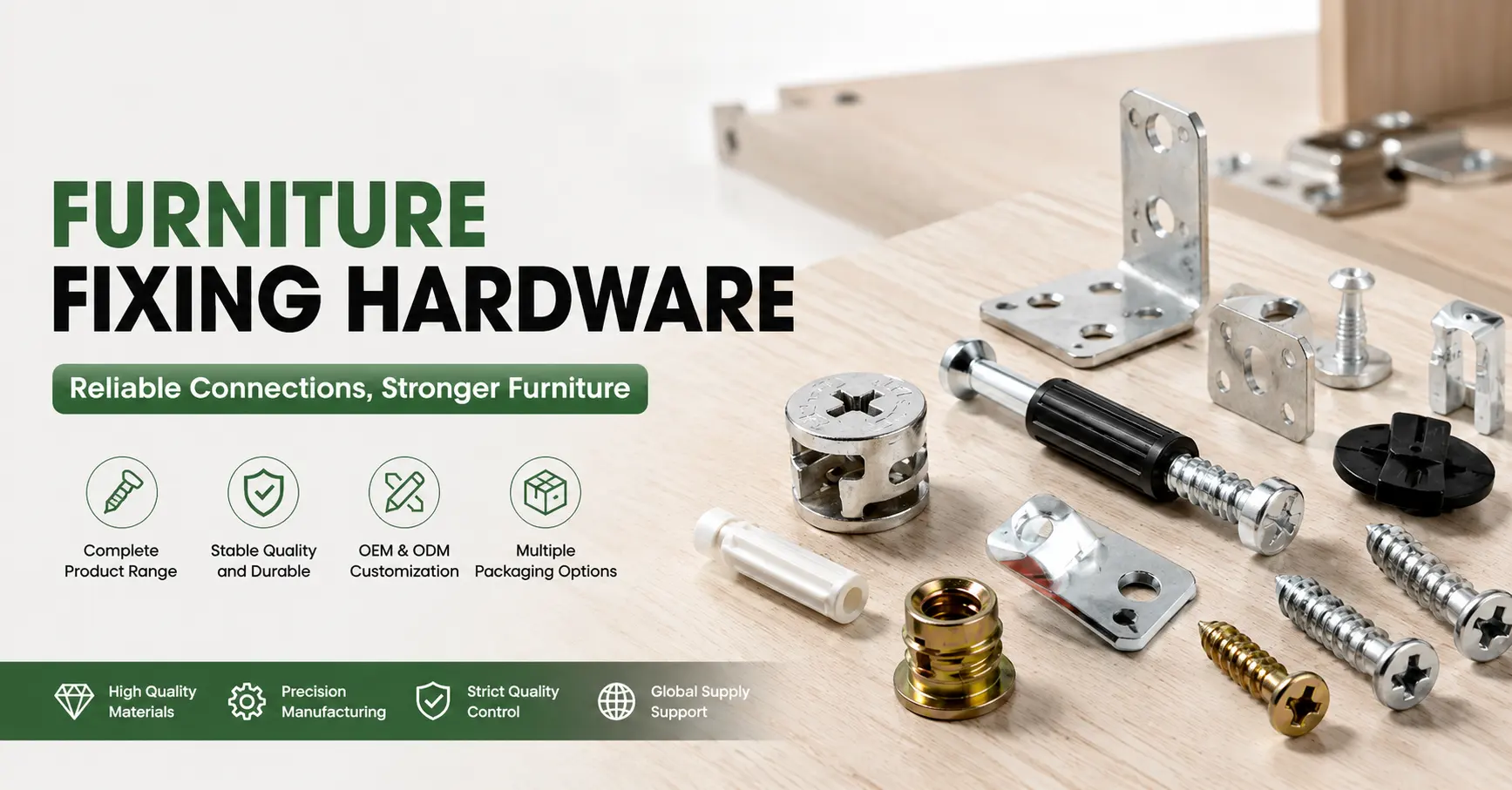
Quick Answer: What Is Furniture Fixing Hardware?
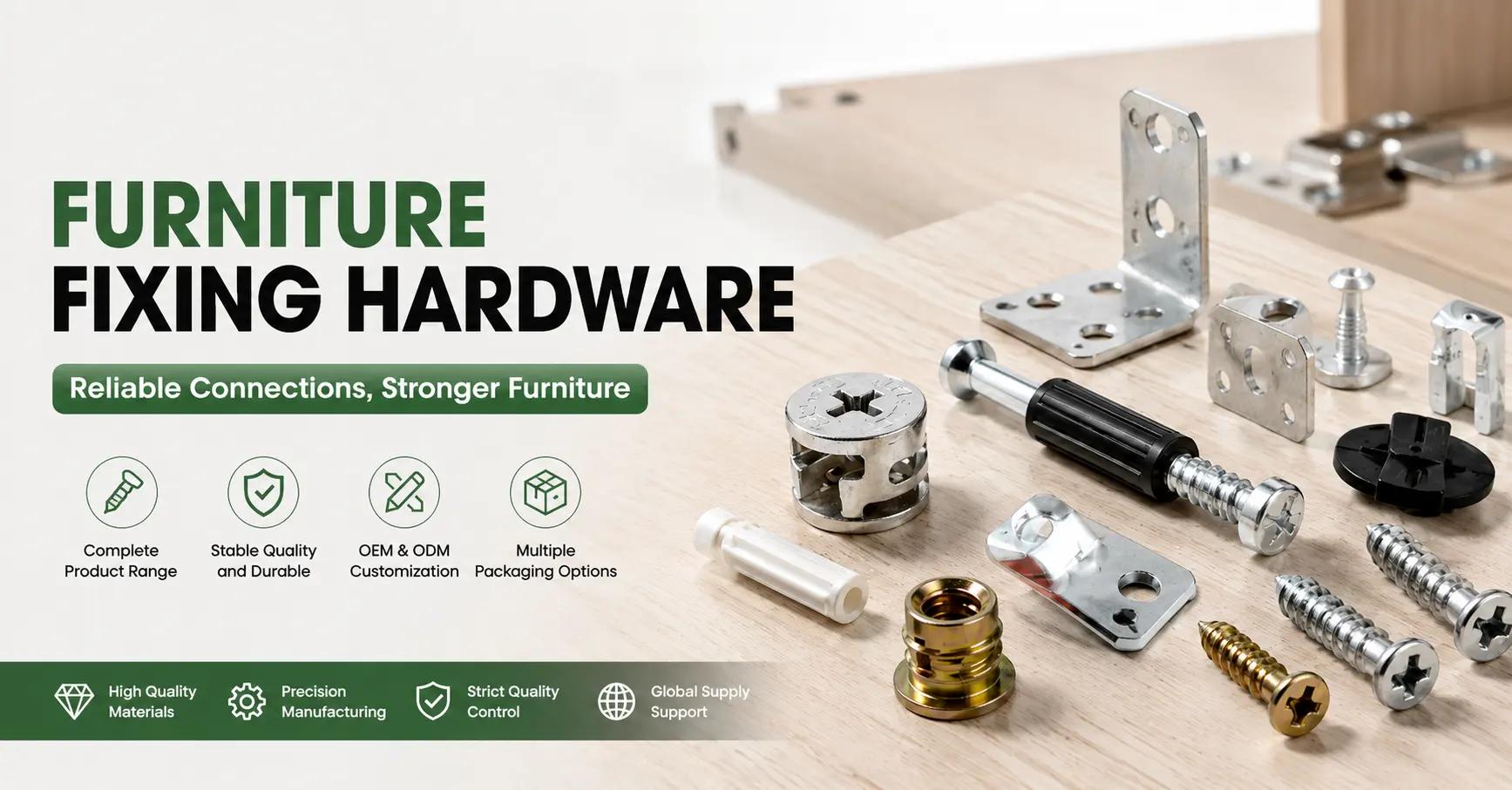
Furniture fixing hardware refers to the screws, nuts, connectors, brackets, plates, anchors, cam locks, and hardware kits used to connect, support, reinforce, or install furniture components.
It is commonly used in cabinets, wardrobes, bookshelves, kitchen furniture, office furniture, hotel furniture, DIY furniture, and flat-pack furniture. For OEM buyers, furniture fixing hardware can also be customized by size, material, finish, packaging method, and assembly requirements.
Common Types of Furniture Fixing Hardware
Furniture fixing hardware covers several product categories. In many furniture projects, buyers need multiple parts packed together as one hardware kit.
| Hardware Type | Common Products | Main Function |
|---|---|---|
| Screws | Wood screws, self-tapping screws, machine screws, confirmat screws | Fastening panels, brackets, and connectors |
| Connectors | Cam locks, cabinet bolts, joint bolts, connector fittings | Connecting panels in flat-pack furniture |
| Nuts | Insert nuts, hex nuts, flange nuts, rivet nuts | Creating strong threaded connections |
| Brackets | L-brackets, corner braces, support plates | Reinforcing corners and supporting structure |
| Stamping parts | Mounting plates, fixing plates, slotted plates | Custom support and connection |
| Anchors and washers | Wall plugs, expansion anchors, flat washers | Installation and load distribution |
| Hardware kits | Bagged kits, boxed sets, blister packs | Complete assembly solutions for furniture models |
For many buyers, a complete furniture fixing hardware solution is more valuable than buying each part separately.
Where Furniture Fixing Hardware Is Used
Furniture fixing hardware is used in many assembly and installation scenarios.
Cabinet and Kitchen Furniture
Cabinet furniture usually requires cam locks, cabinet bolts, wood screws, shelf supports, and brackets. The hardware must match the board thickness and hole position to ensure smooth assembly.
Wardrobes and Storage Systems
Wardrobes often need stronger fixing parts because panels are taller and heavier. Insert nuts, connector bolts, reinforcement plates, and brackets help improve stability.
Flat-Pack Furniture
Flat-pack furniture depends heavily on accurate furniture assembly hardware. Every screw, connector, and fixing part must be packed correctly with the furniture set.
Office and Hotel Furniture
Office desks, hotel cabinets, and commercial furniture usually require stable hardware for repeated use. Buyers should pay attention to material strength and surface treatment.
DIY and Retail Hardware Kits
Retail and e-commerce sellers often need small fixing hardware kits with clear packaging, labels, barcodes, and complete part combinations.
How to Choose the Right Furniture Fixing Hardware
Choosing furniture fixing hardware starts with the furniture structure, not only the product name.
1. Match the Board Material
Different board materials require different fixing solutions. MDF, particleboard, plywood, solid wood, and laminated boards may need different screw types, thread designs, and connector sizes.
2. Confirm Board Thickness
Board thickness affects screw length, cam lock size, insert nut depth, and connector position. If the hardware does not match the board, assembly may become loose or difficult.
3. Check Load Requirements
A decorative panel and a load-bearing shelf need different fixing hardware. Brackets, support plates, and stronger screws may be required for heavier furniture.
4. Select the Right Finish
Indoor furniture often uses zinc-plated or nickel-plated hardware. For humid environments, stainless steel or improved anti-rust treatment may be better.
5. Test the Full Assembly
For OEM orders, buyers should test the complete furniture fixing hardware kit before mass production. This helps confirm fit, quantity, installation sequence, and user experience.
Material and Surface Finish Options
| Option | Benefits | Suitable Use |
| Carbon steel | Strong and cost-effective | General screws, brackets, connectors |
| Stainless steel | Better corrosion resistance | Premium or humid environments |
| Zinc plating | Balanced appearance and rust resistance | Indoor furniture fixing hardware |
| Nickel plating | Smooth and cleaner appearance | Visible connectors and premium kits |
| Black coating | Modern appearance | Dark furniture or exposed hardware |
| Plastic parts | Lightweight and economical | Caps, anchors, sleeves, packaging accessories |
For most indoor furniture projects, carbon steel with zinc plating is a practical option. For higher-end furniture or humid markets, stainless steel or special coating should be considered.
Furniture Fixing Hardware Kit: What Should Be Included?
Many furniture brands and wholesalers do not only buy loose hardware. They need a complete furniture fixing hardware kit for one furniture model.
A typical kit may include:
- Wood screws
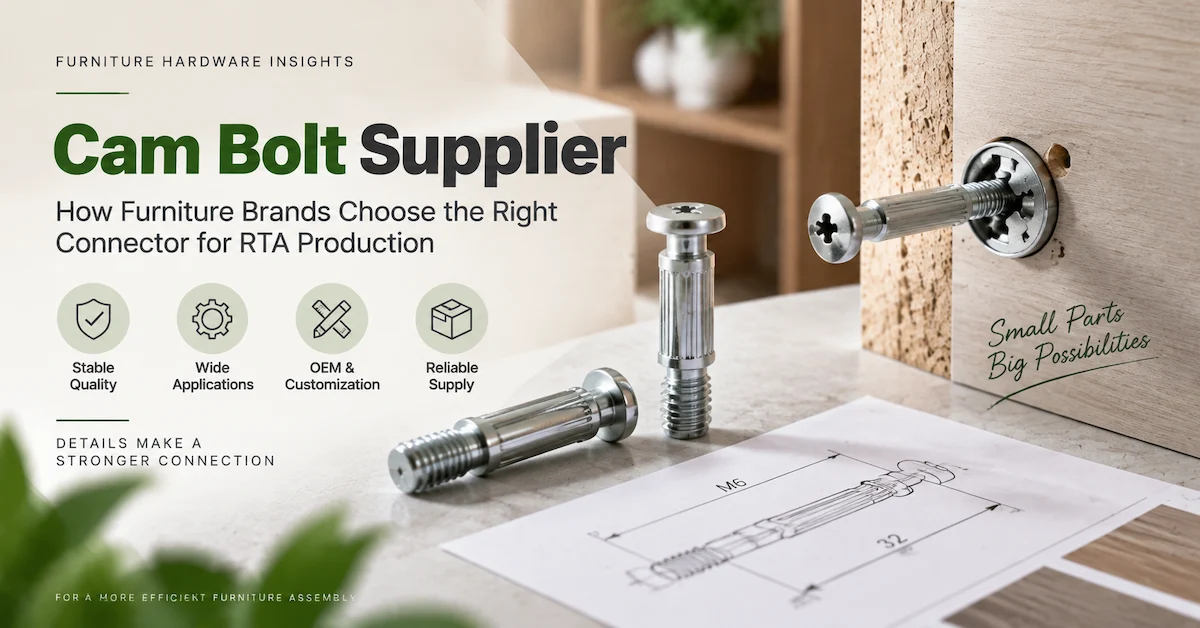
- Cam locks
- Cabinet bolts
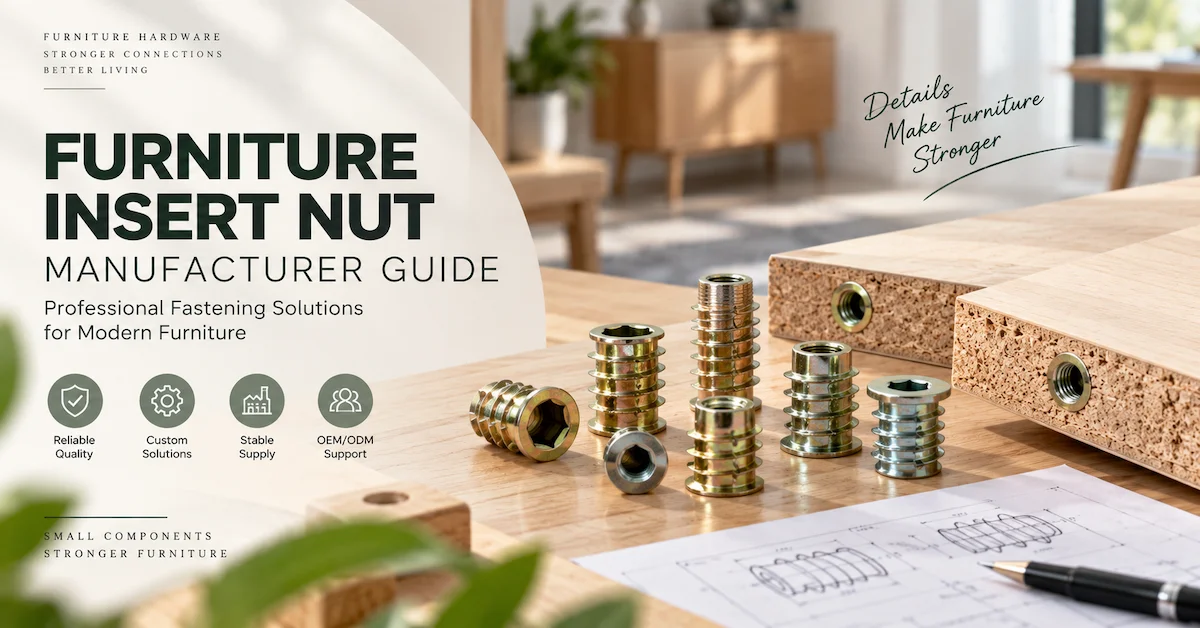
- Insert nuts
- Washers
- L-brackets
- Plastic caps
- Wall plugs
- Assembly accessories
- Custom bag, box, or blister packaging
A clear BOM is important before production.
| Kit Information | What Buyers Should Confirm |
| Part name | Screw, cam lock, bracket, nut, connector |
| Quantity | Quantity per furniture unit |
| Size | Diameter, length, thickness, hole spacing |
| Material | Steel, stainless steel, zinc alloy, plastic |
| Finish | Zinc plated, nickel plated, black, custom |
| Packaging | Bag, blister, box, bucket, private label |
| Label | Model number, barcode, customer logo, part code |
| Inspection | Quantity check, fit check, surface check |
A complete and accurate kit reduces missing-part complaints and improves customer satisfaction.
OEM and Custom Furniture Fixing Hardware
Standard hardware is not always enough. Many furniture projects require customized fixing hardware based on structure, appearance, or installation method.
JHFIX can support OEM requirements such as:
- Custom screw length and head type
- Special connector size
- Custom bracket shape
- Stamped fixing plates
- Insert nut and bolt matching
- Surface finish customization
- Hardware kit combination
- Bag, blister, box, or bucket packaging
- Private-label packaging support
Buyers can send drawings, samples, photos, or a BOM for evaluation. To understand JHFIX’s manufacturing background, buyers can visit theAbout Us page.
Quality Control Points Buyers Should Check
Furniture fixing hardware must be inspected carefully because small errors can affect the whole furniture set.
Important inspection points include:
- Screw length and diameter
- Thread quality
- Connector size
- Hole position
- Bracket bending angle
- Surface finish
- Rust resistance
- Quantity per kit
- Label and barcode accuracy
- Carton packing condition
For furniture kits, quantity inspection is especially important. A product may pass the material check but still fail if one part is missing from the package.
Common Sourcing Problems and How to Avoid Them
Many furniture fixing hardware problems happen because specifications are unclear.
| Problem | Possible Cause | How to Avoid It |
| Loose assembly | Wrong connector size or board mismatch | Confirm board thickness and test sample |
| Panel damage | Screw too long or wrong thread | Match screw length with board material |
| Rust issue | Poor surface treatment | Confirm plating or coating standard |
| Missing parts | No BOM or weak packaging control | Use clear kit list and final quantity check |
| Difficult assembly | Hardware not tested together | Approve complete sample kit before order |
| Unstable supply | Supplier cannot support repeat orders | Choose a supplier with full product range |
A professional supplier should help buyers reduce these risks before mass production.
Why Choose JHFIX for Furniture Fixing Hardware?
JHFIX is suitable for buyers who need both individual furniture fixing hardware and complete assembly kits. Instead of sourcing screws, nuts, brackets, connectors, and packaging from different suppliers, buyers can coordinate more parts through one factory-supported supplier.
JHFIX can support:
- Screws for furniture assembly
- Cam locks and cabinet connectors
- Insert nuts and matching bolts
- Stamped brackets and fixing plates
- Washers, anchors, and accessories
- OEM furniture hardware kits
- Bag, blister, box, and bucket packaging
- Sample development and batch production
- Pre-shipment quality inspection
For common order questions such as samples, payment, shipping, and customization, buyers can check theFAQ page. For project discussion or quotation, buyers cancontact JHFIX.
What to Prepare Before Requesting a Quote
To get a faster and more accurate quotation, buyers should prepare:
| RFQ Information | Details |
| Product type | Screw, cam lock, bracket, nut, connector, kit |
| Application | Cabinet, wardrobe, shelf, office furniture, DIY furniture |
| Board material | MDF, particleboard, plywood, solid wood, laminated board |
| Size | Diameter, length, thickness, hole spacing |
| Finish | Zinc plated, nickel plated, black, stainless, custom finish |
| Quantity | Trial order, batch order, annual forecast |
| Packaging | Bulk, bag, blister, box, bucket, private label |
| Drawing/sample | Photo, 2D drawing, 3D file, or physical sample |
| Market | Wholesale, retail, furniture factory, e-commerce |
| Inspection needs | Dimension, finish, quantity, packaging check |
Clear information helps reduce quotation time and avoids repeated communication.
FAQ
1. What is furniture fixing hardware?
Furniture fixing hardware includes screws, cam locks, cabinet bolts, insert nuts, brackets, anchors, washers, and connectors used to assemble, reinforce, or install furniture.
2. What furniture products use fixing hardware?
It is widely used in cabinets, wardrobes, bookshelves, shelves, kitchen furniture, office furniture, hotel furniture, DIY furniture, and flat-pack furniture.
3. Can furniture fixing hardware be customized?
Yes. It can be customized by size, material, finish, screw type, connector type, bracket shape, packaging method, and kit combination.
4. What should be included in a furniture fixing hardware kit?
A kit may include screws, cam locks, cabinet bolts, insert nuts, washers, brackets, plastic caps, wall plugs, and installation accessories.
5. How do I choose the right fixing hardware?
Check board material, board thickness, load requirement, installation method, surface finish, and whether the hardware parts fit together correctly.
6. What packaging is available for furniture fixing hardware?
Common options include bulk packaging, bag packaging, plastic blister packaging, box packaging, and plastic bucket packaging.
7. What information should I provide for an OEM quotation?
Provide product photos, drawings or samples, size, material, finish, quantity, application, packaging requirements, and target market.
8. How can I avoid missing parts in furniture hardware kits?
Use a clear BOM, approve sample kits, confirm packaging quantity, define labels, and request final quantity inspection before shipment.
Conclusion
Furniture fixing hardware directly affects furniture assembly quality, customer experience, and long-term product reliability. For global buyers, the right supplier should provide more than standard screws or connectors. It should support product matching, OEM customization, quality inspection, packaging accuracy, and repeat supply.
If you are sourcing furniture fixing hardware for cabinets, wardrobes, flat-pack furniture, DIY kits, or wholesale distribution, JHFIX can help review your requirements, prepare suitable hardware options, and provide packaging solutions for your target market.
Browse theJHFIX product range, learn moreabout our manufacturing experience, check theFAQ section, orcontact usto discuss your furniture hardware project.