
LCL vs FCL for fasteners is a weight decision before it is a volume decision. Steel screws and hardware typically weigh far more than 1,000 kg per cubic metre once packed, so LCL freight is charged on gross weight rather than on space, and a container reaches its payload limit long before it is full. Use LCL while your tonnage is small and consolidation is acceptable; move to FCL when the tonnage you ship approaches a container's payload and the all-in cost per kilo falls below the LCL W/M rate.
By Lin Wei, Technical Sales Engineer, JHFIX
LCL vs FCL: Compare Revenue Tons, Then Total Cost
LCL is priced per revenue ton, usually written as W/M: one revenue ton equals one cubic metre or 1,000 kg, whichever produces the larger charge. FCL is priced per container, whatever you put inside it. That single difference explains why two buyers shipping the same 10 CBM can pay completely different freight bills.
For low-density cargo — foam, empty bottles, flat-packed panels — cubic metres bind and the CBM figure on the packing list is the number that matters. For fasteners it is almost always the weight. A carton of screws is dense by nature, so the W/M calculation resolves to tonnes, and the LCL bill is effectively a price per tonne of hardware.
- Under roughly 5 tonnes per shipment: LCL is normally the lower-cost route, even after destination charges.
- Between 5 and 20 tonnes: run the arithmetic in the next section with your forwarder's actual rates; the answer varies by lane and season.
- Above roughly 20 tonnes: FCL usually wins, because a 20ft container is weight-limited at about 28 tonnes and you are close to filling it.
| Criterion | LCL | FCL |
|---|---|---|
| Chargeable basis | W/M — the greater of CBM or metric tonnes (1 CBM = 1,000 kg) | Per container, regardless of load |
| Cost structure | Ocean freight per W/M plus CFS handling, documentation, destination charges and any minimum charge | Container freight plus fixed origin and destination charges |
| Handling touches | Cartons are loaded at a consolidation warehouse and unloaded again at destination | Sealed from stuffing to devanning |
| Damage and shortage exposure | Higher: shared container, more handling, mixed cargo | Lower: one consignee, fewer touches |
| Transit time | Longer, because of consolidation and deconsolidation windows | Direct sailing, faster door to door |
| Customs | Cleared as one house bill among many in the co-loader's manifest | One entry, one container |
| Best fit | Trial orders, mixed SKUs, seasonal top-ups | Repeat programmes, schedule-critical deliveries |
Why Fastener Cargo Breaks the CBM Rule
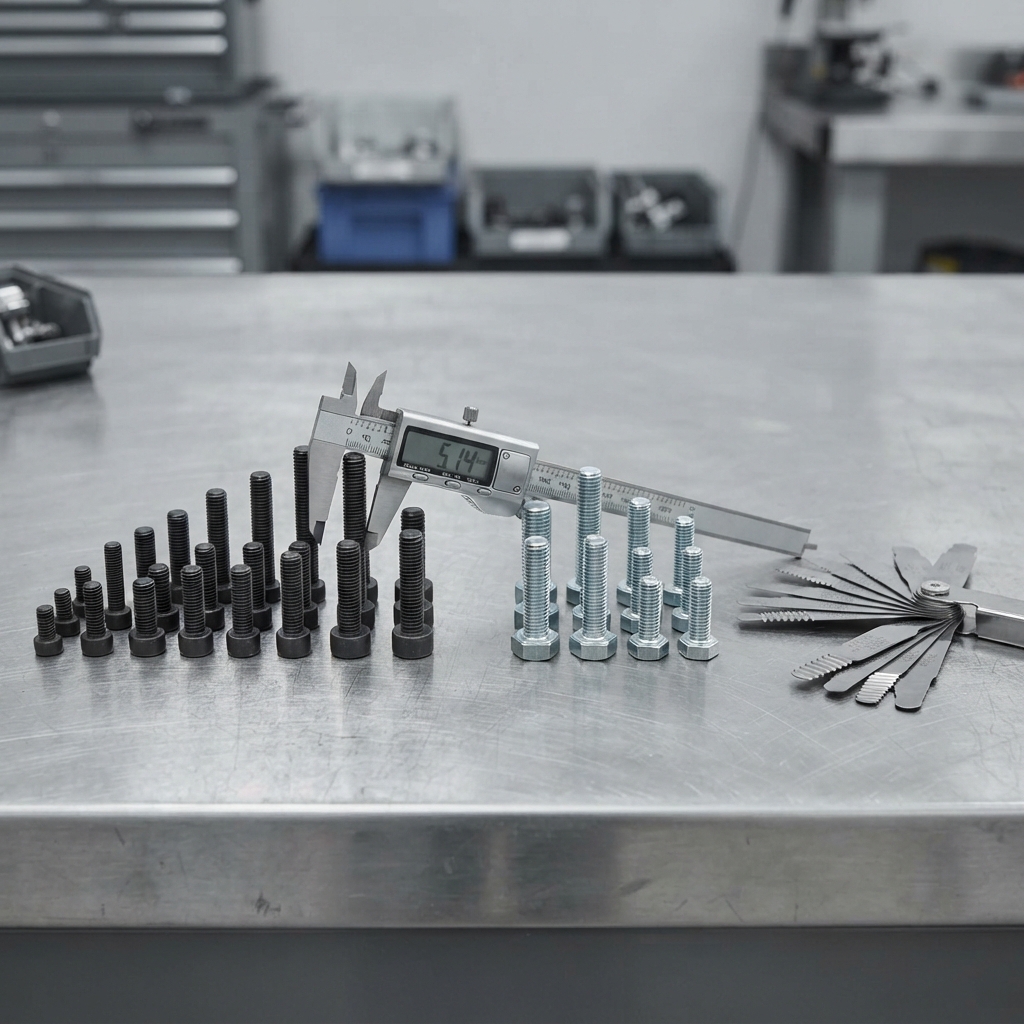
Solid steel has a density of about 7.85 g/cm³. Loose screws, nuts and washers in a carton leave void space, so the packed density is lower — but it still lands well above 1,000 kg per cubic metre, often two to four times higher. That is the physical reason the standard LCL vs FCL shipping rule of thumb — "LCL under 15 CBM" — fails for hardware buyers: the threshold assumes light cargo.
Run the container arithmetic and the effect becomes obvious. A 20ft general purpose container offers about 33 CBM of space and a payload in the region of 28 tonnes on typical carrier planning figures. Weight therefore becomes the limiting factor once cargo density passes roughly 850 kg per cubic metre (28,000 ÷ 33). A 40ft high cube offers about 76 CBM with a payload around 28.6 tonnes, so the density at which weight binds falls to roughly 380 kg per cubic metre (28,620 ÷ 76).
| Container | Typical internal volume | Typical payload for planning | Density at which weight limits the load |
|---|---|---|---|
| 20ft GP | ~33 CBM | ~28,000 kg | ~850 kg/CBM |
| 40ft GP | ~67 CBM | ~28,000 kg | ~420 kg/CBM |
| 40ft HQ | ~76 CBM | ~28,600 kg | ~380 kg/CBM |
Values are industry planning figures, not a booking confirmation. Carrier payload limits, tare weight and road limits at destination all override them.
"Cube Out" Versus "Weigh Out"
To cube out is to fill the container's volume; to weigh out is to hit its payload. A 40ft high cube loaded with cartons of screws will weigh out at roughly half its volume. An FCL container is therefore limited by payload, not by how full it looks — you still pay for the whole box, so the economics of FCL for hardware depend on payload utilisation. This is the single most useful mental model for a fastener buyer: plan the load in kilograms and pallet positions first, then check the CBM figure.
The Break-Even Formula Buyers Should Run
The LCL vs FCL decision is arithmetic, not intuition. Two formulas and one division are enough:
- LCL cost = (chargeable W/M × LCL ocean rate) + fixed LCL charges (CFS, documentation, destination handling, minimum charge).
- FCL cost = container ocean rate + fixed FCL charges (origin handling, documentation, destination release).
- Compare freight cost per kg: divide each total by gross shipment weight, not net product weight.
The break-even tonnage follows directly: break-even W/M ≈ (FCL rate − LCL fixed charges) ÷ LCL rate per W/M. With an illustrative 20ft rate of USD 1,250, fixed LCL charges of USD 150 and an LCL rate of USD 55 per W/M, break-even sits at about 20 revenue tons. Treat these figures as a worked example, not a quotation — substitute your forwarder's rates for your lane.
| Worked example (illustrative rates) | Scenario A: trial order | Scenario B: repeat order |
|---|---|---|
| Gross weight | 2,000 kg | 22,000 kg |
| Cargo volume | 1.6 CBM | 17 CBM |
| Chargeable W/M | 2 (weight binds) | 22 (weight binds) |
| LCL total (USD 55/W/M + USD 150 fixed) | USD 260 | USD 1,360 |
| FCL 20ft total (USD 1,250) | USD 1,250 | USD 1,250 |
| Cost per kg | LCL USD 0.13 vs FCL USD 0.63 | LCL USD 0.062 vs FCL USD 0.057 |
| Decision | LCL | FCL, marginally |
Two cautions. First, destination charges in some markets are high enough to flip a marginal FCL decision back to LCL. Second, the comparison is only valid when both options carry the same cargo protection: LCL cartons are handled more often, so damage and shortage costs belong in the model.
Packing Density: The Lever You Actually Control
Because the chargeable basis can switch between weight and volume, packaging decisions move the LCL vs FCL answer. For dense bulk screws the bill is weight-driven, so the lever is packaging weight and payload utilisation. For retail-ready kits the bill is often volume-driven, because moulded compartment cases and printed cards push density below 1,000 kg per cubic metre. Run the CBM calculation from measured carton dimensions, never from a per-piece estimate.
- Palletised versus floor-loaded. Pallets add roughly 15–25 kg each and consume height, reducing kilos per container. Floor loading raises payload utilisation but slows devanning and increases handling damage risk.
- Carton size steps. A carton 5 cm taller across a thousand cartons adds real cubic metres. On weight-bound hardware that does not reduce freight; on volume-bound kits it does.
- Packaging weight counts. Heavy board, dividers and cases are billed as cargo. Specify the lightest packing that still passes compression and drop tests.
- Moisture protection. Desiccant and barrier liners add little weight but prevent rust claims that cost far more than the freight saving.
| Pack format | Density tendency | Chargeable basis in LCL | Main freight lever |
|---|---|---|---|
| Bulk cartons of loose screws | High | Weight | Payload utilisation, packaging weight |
| Counted bags inside master cartons | High to medium | Usually weight | Bag count per carton, carton cube |
| Blister packs on printed cards | Medium | Mixed | Card size, carton fill |
| Moulded compartment cases | Low | Often volume | Case footprint, nesting, carton cube |
Container Payload, Road Limits and the VGM Declaration
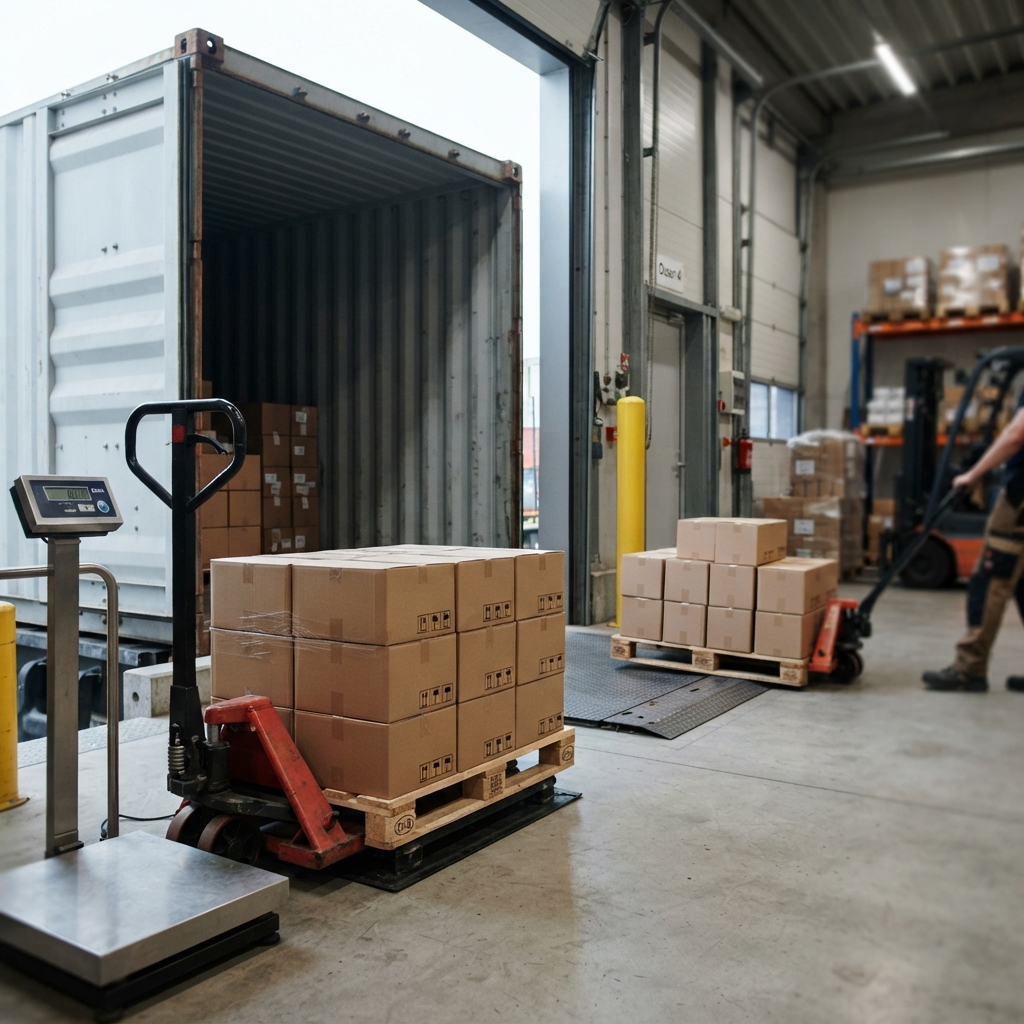
The container's payload rating is not the last limit in the chain. Road legal gross vehicle weights at destination frequently bind before the container does, and an overweight box has to be reworked at the port or at the consignee's yard — a cost that appears after the freight invoice. Under the SOLAS verified gross mass requirement, the shipper must declare the packed container's verified gross mass before loading; that figure includes pallets, dunnage and securing material, not just the product. This is also the stage where the LCL vs FCL choice can go wrong: a plan that fits the volume but not the road limit is not a plan.
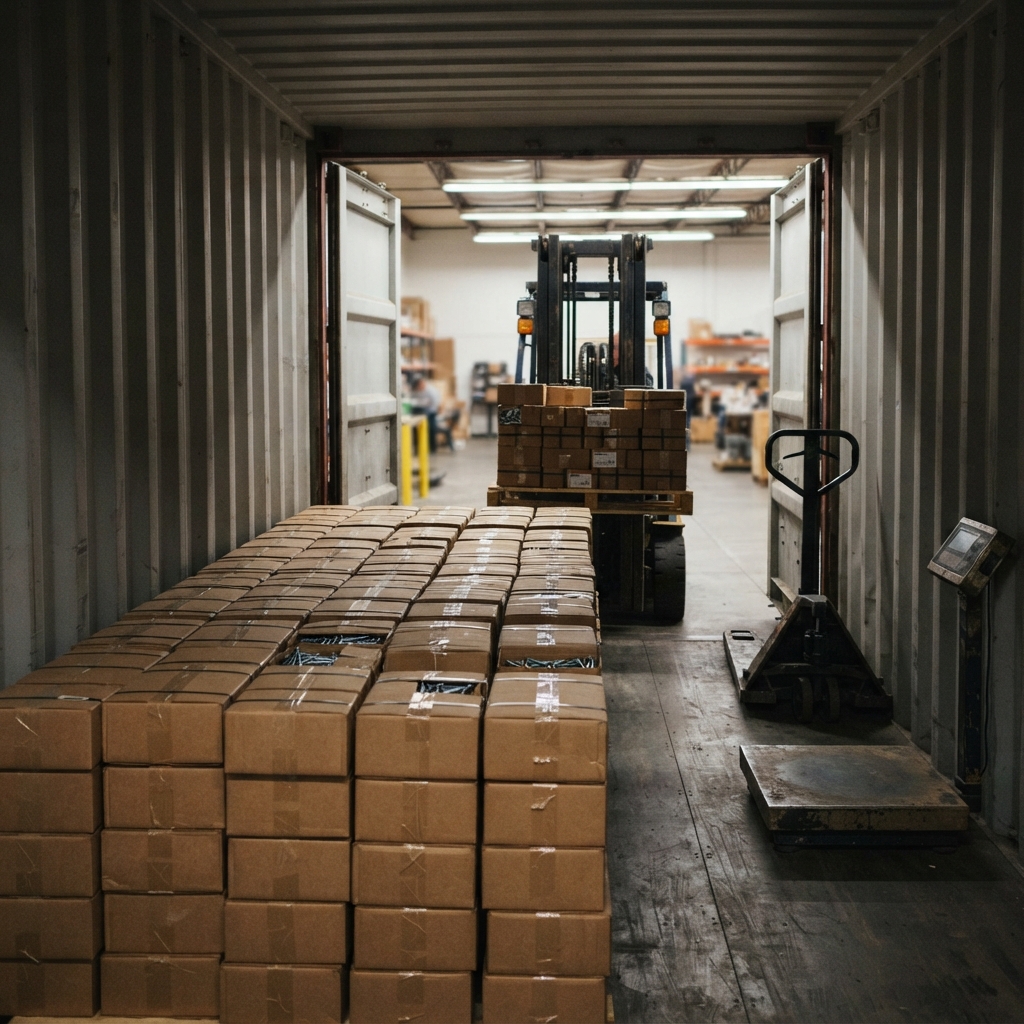
Practical rule: weigh a finished pallet, not a single part. Multiply by pallet count, add dunnage, and compare the result with both the carrier's payload limit and the destination road limit. If the two numbers disagree, the smaller one governs.
Incoterms Decide Who Books and Who Claims
The Incoterm on your purchase order decides which party holds the contract of carriage, and therefore who can claim against the carrier when cartons arrive crushed or short. Under FOB the buyer arranges and pays main carriage, and risk passes once the goods are on board at the port of shipment. CIF looks similar on an invoice but is widely misread: the seller pays freight and insurance to the destination port, yet risk still passes at shipment, so a CIF buyer can hold a policy and still carry the commercial argument. DDP shifts delivery and import clearance to the seller, which changes both the risk point and the price structure.
The eleven rules and their exact risk-transfer points are defined by the ICC's Incoterms 2020 rules. The term does not change the LCL vs FCL arithmetic, but it changes who can press the claim. Whatever the term, the claim file is built at the same moment — before the container doors close:
- Container number, seal number and photographs of the sealed doors.
- Photographs of carton condition and pallet patterns at stuffing.
- Packing list with carton count, gross weight per carton and total gross weight.
- Weighbridge ticket for the loaded container.
- Survey report and photographs taken at devanning, before cartons are moved.
Without the stuffing evidence, a rust or crush claim usually fails, whichever Incoterm applies.
A 10-Point Freight Review Before You Confirm the Order
Run this LCL vs FCL review while the quotation is still open, not after the deposit is paid.
- Convert the order to gross weight in kilograms, including packaging and pallets.
- Calculate CBM from the actual carton dimensions, not from an estimate per piece.
- Compute chargeable W/M as the greater of CBM and tonnes.
- Get the LCL rate per W/M plus every fixed charge, and check the minimum charge.
- Get the FCL rate for 20ft and 40ft, and confirm the payload the carrier will accept.
- Run the per-kilo comparison for both options on the same cargo.
- Check the destination road limit and the delivery appointment constraints.
- Confirm who books, who insures and who claims under the agreed Incoterm.
- Agree the loading evidence pack: seal, photos, weight ticket, packing list.
- Decide the packing format before the price is fixed, not after.
Common Mistakes That Add Cost
- Judging LCL vs FCL on CBM alone. For hardware this understates the charge and hides the FCL break-even.
- Using net product weight. Cartons, bags, cases and pallets are all billed weight.
- Assuming a 40ft is cheaper per tonne. It is cheaper per cubic metre; for dense cargo the payload, not the volume, sets the ceiling.
- Choosing LCL on the ocean rate only. Fixed charges and destination handling often dominate a small shipment.
- Ignoring handling damage. Extra touches in a shared container raise the real cost of LCL for finished, printed or plated parts.
- Fixing the pack format after the price. Changing from bulk cartons to compartment cases changes the chargeable basis and the freight.
What This Means for JHFIX Orders
JHFIX is the hardware supply brand behind Jiangmen Jinhe Hardware Products Co., Ltd., a manufacturer in Jiangmen, Guangdong, with cold heading, tapping, punching, injection moulding, assembly, packing and inspection under one roof, and international sales handled by its authorised export partner, Jiangmen Shenxin Trading Co., Ltd. The company has supplied fasteners and furniture fittings to buyers in more than 40 countries since 2004.
That range matters for freight planning because the same order can contain both weight-bound and volume-bound packing. Two examples from the current catalogue:
- The yellow-coated coarse-thread deck screw assortment is offered in bulk cartons, counted bags, tubs and contractor labels — dense cargo where payload utilisation drives the freight bill.
- The metric socket screw, nut and washer assortment kit ships in a divided clear compartment case with hex keys — a format whose cube, not its weight, can decide the LCL charge.
Ask for the carton dimensions, count per carton and gross weight per carton with the quotation, then run the per-kilo comparison above. If you are comparing suppliers, normalise the offers first with our line-by-line quote comparison method, and lock the packing detail using the fields in our fastener packaging specification. Payment structure also belongs in the landed-cost model; our guide to fastener payment terms explains how deposit, balance and inspection release change the cash exposure between order and container.
FAQ
Is LCL cheaper than FCL for screws?
Usually yes below roughly 15–20 tonnes on a given lane, and no above it. The LCL vs FCL crossover depends on your forwarder's W/M rate, the fixed LCL charges and the container rate, so calculate per kilo rather than assuming.
How is LCL chargeable weight calculated?
Compare the shipment's cubic metres with its metric tonnes, treating 1 CBM as 1,000 kg. The larger number is the chargeable W/M. Most co-loaders also apply a minimum charge per shipment.
How many tonnes fit in a 20ft container?
Plan around 28 tonnes of payload, then check the carrier's limit, the tare weight and the road limit at destination. The lower figure governs.
Does a 40ft high cube hold more screws than a 20ft?
It holds far more volume but only marginally more weight. Because fasteners weigh out early, a 40ft HQ is often the wrong box for dense cargo and the right one for bulky kits.
Does packaging really change my freight cost?
Yes. Packaging counts as billed weight, and the pack format can move the chargeable basis between tonnes and cubic metres. Compartment cases and printed cards are the usual culprits.
Under FOB, who pays for damage in transit?
The buyer carries the risk after the goods are on board and claims against the carrier or its insurer. The seller's stuffing photographs and weight ticket are usually the decisive evidence.
Can I mix several screw sizes in one container?
Yes. Use a pallet plan and clear carton marks so the container can be devanned by SKU. Mixing is straightforward; palletising every small SKU separately is what wastes payload.
When should I stop using LCL?
When the freight cost per kg of a full container falls below the LCL W/M cost, or when handling damage and transit time cost more than the freight difference. Both happen earlier than most buyers expect with dense hardware.
Conclusion
LCL vs FCL for fasteners comes down to a number you can calculate before you book: the gross weight of the order against the payload of the container. Because hardware is dense, LCL behaves like a price per tonne and FCL is limited by kilos rather than cubic metres. Run the break-even with real rates, choose the pack format before fixing the price, and build the loading evidence pack so a damage claim is arguable rather than theoretical.
If you are planning a first or repeat order and want the carton dimensions, counts and gross weights alongside the quotation, send the drawing or sample details through our contact page and we will price the hardware and the packing together.