
Cabinet Connectors: The Hidden Components Behind Strong Furniture
Furniture design is often judged by appearance, materials, and functionality, but the hidden connection system inside furniture determines its long-term performance. Cabinet connectors may be small components, yet they play an important role in assembly strength, structural stability, and production efficiency.
For cabinet manufacturers, kitchen furniture factories, wardrobe producers, and OEM furniture brands, choosing the right cabinet connector manufacturer is a critical sourcing decision. Reliable connectors help ensure accurate assembly, reduce production problems, and improve the overall quality of finished furniture.
A professional cabinet connector supplier should provide more than standard hardware products. The supplier should understand furniture structures, connection methods, manufacturing requirements, and customization needs.
JHFIX provides furniture hardware solutions including cabinet connectors, screws, nuts, and customized hardware components for furniture manufacturers worldwide.
Why Cabinet Connectors Matter in Furniture Manufacturing
Modern furniture production requires hardware that can support efficient assembly while maintaining structural reliability.
Cabinet connectors are responsible for:
- Joining furniture panels securely
- Supporting repeated assembly and disassembly
- Improving production efficiency
- Maintaining consistent product quality
- Creating cleaner furniture designs
For manufacturers, poor-quality connectors can create problems such as:
- Loose furniture joints
- Panel misalignment
- Difficult installation
- Increased production adjustments
- Higher after-sales costs
A reliable cabinet connector manufacturer helps furniture companies avoid these issues by providing accurate components, stable production quality, and technical support.
What Does a Cabinet Connector Manufacturer Produce?
A professional cabinet connector manufacturer develops and produces hardware components used for furniture assembly systems.
Common cabinet connector products include:
- Cam lock connectors
- Connecting bolts
- Insert nuts
- Knock-down fittings
- Hidden furniture connectors
- Furniture joint components
- Custom metal hardware parts
These products are widely used in:
- Kitchen cabinets
- Wardrobes
- Office furniture
- Storage cabinets
- Modular furniture
- Flat-pack furniture
The best connection solution depends on furniture structure, panel materials, production process, and customer requirements.
Main Types of Cabinet Connectors
Different cabinet designs require different connection methods. Manufacturers usually select connectors based on strength requirements, installation methods, and production efficiency.
Cam Lock Connectors
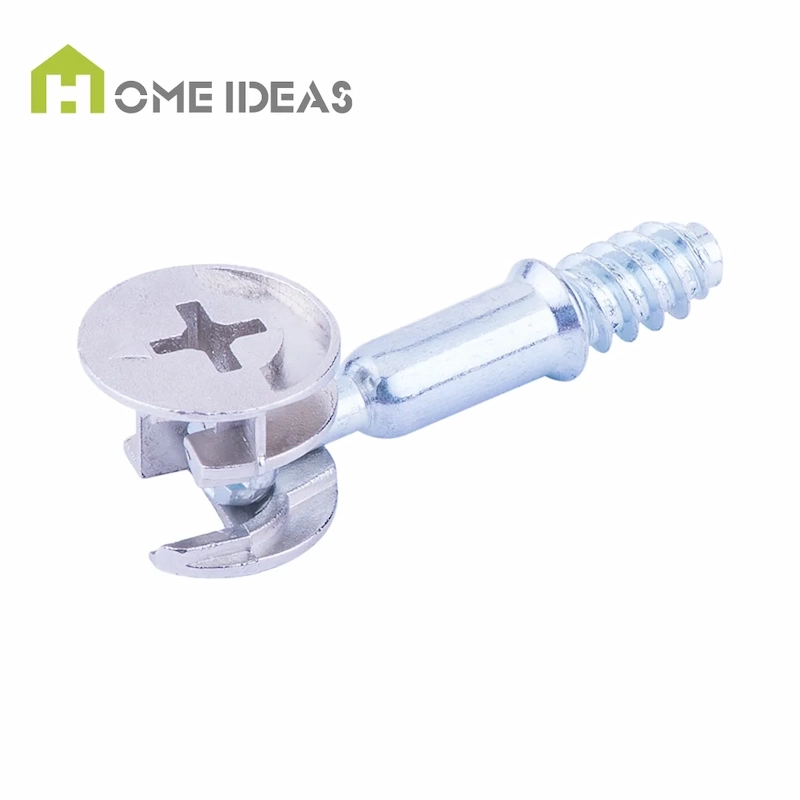
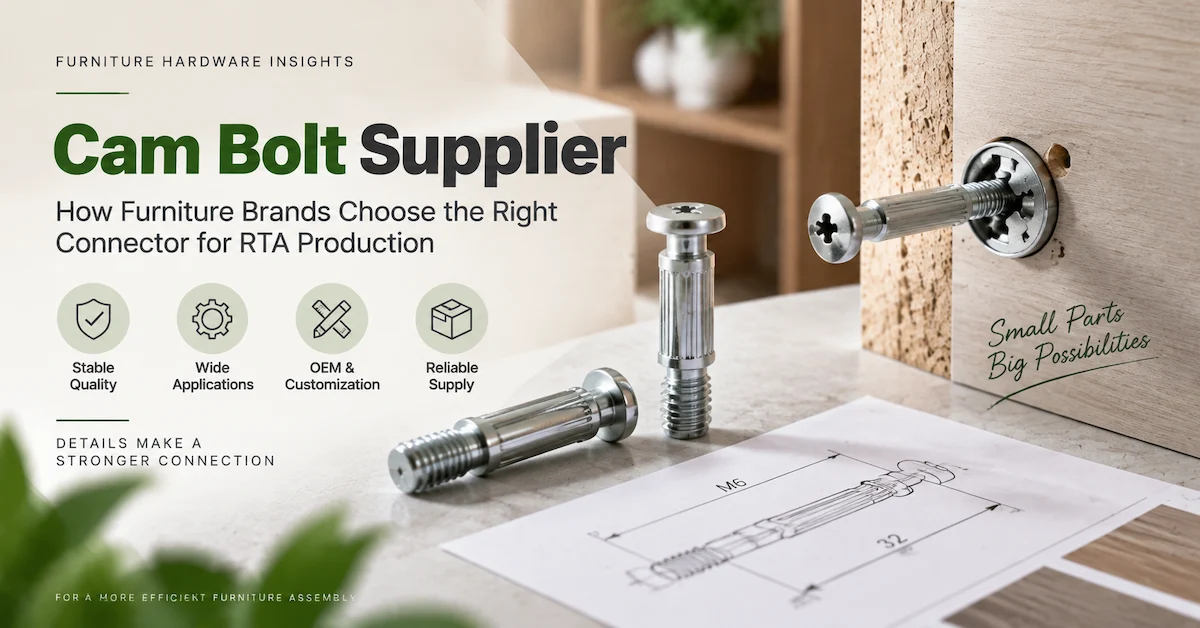
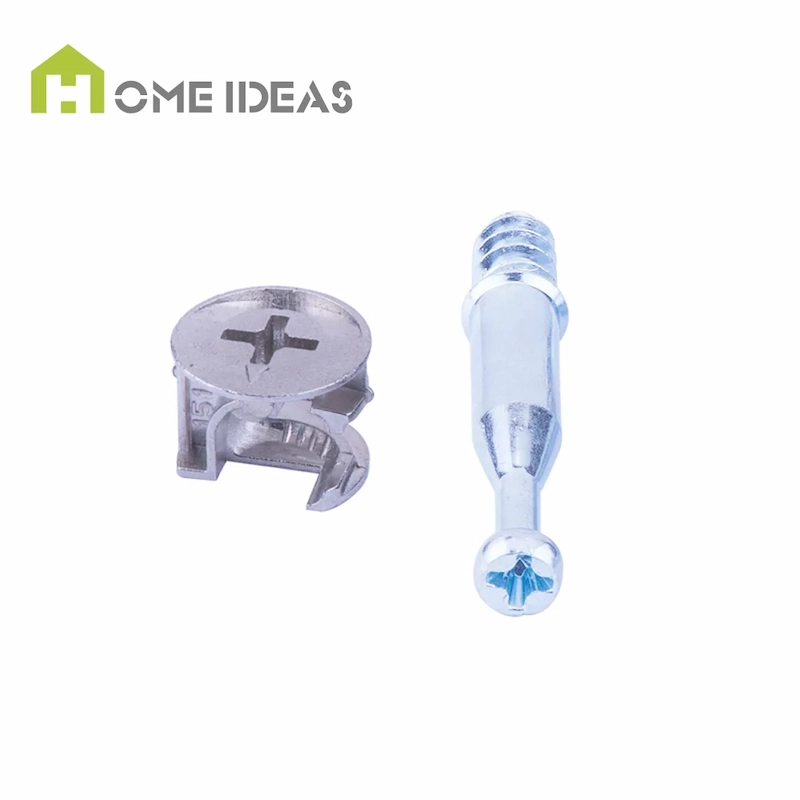
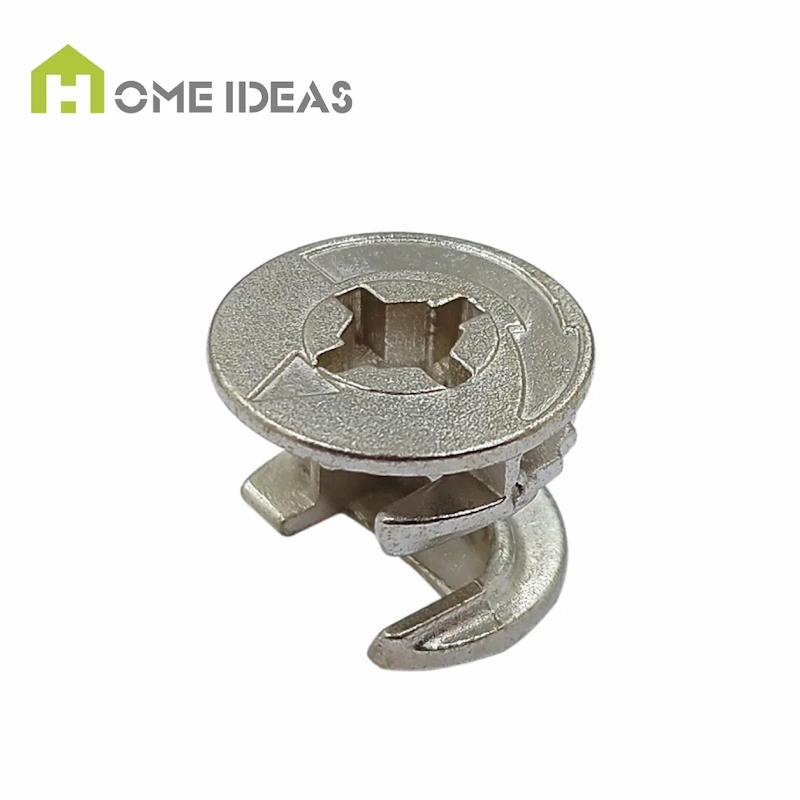
Cam lock connectors are one of the most widely used solutions in cabinet and flat-pack furniture manufacturing.
A cam lock system usually includes:
- Eccentric cam
- Connecting bolt
- Pre-drilled furniture panels
During installation, the cam rotates and pulls the connecting bolt into position, creating a secure connection between panels.
Cam locks are commonly used for:
- Kitchen cabinets
- Wardrobes
- Shelving systems
- Modular furniture
- Ready-to-assemble furniture
Important selection factors include:
Cam Size
The cam diameter must match the furniture structure and drilling requirements.
Bolt Length
The connecting bolt length should be selected according to:
- Panel thickness
- Connector position
- Assembly requirements
Material and Finish
Material selection affects:
- Strength
- Appearance
- Corrosion resistance
A professional cabinet connector manufacturer should provide matched cam lock systems instead of separate components without compatibility testing.
Connecting Bolts
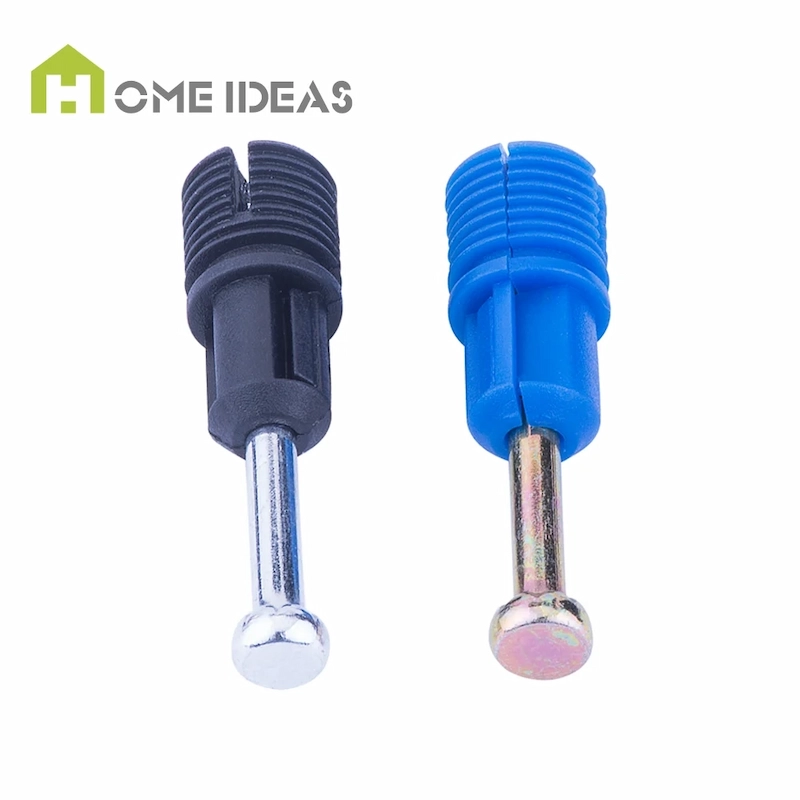
Connecting bolts work together with cam locks and other furniture connection systems.
They are designed to provide stable connections between furniture components.
Key specifications include:
- Diameter
- Length
- Thread design
- Head type
- Surface treatment
Incorrect connecting bolt selection may cause:
- Weak connections
- Assembly difficulties
- Component mismatch
For cabinet manufacturers, supplier experience with complete connection systems is important.
Insert Nuts and Threaded Components
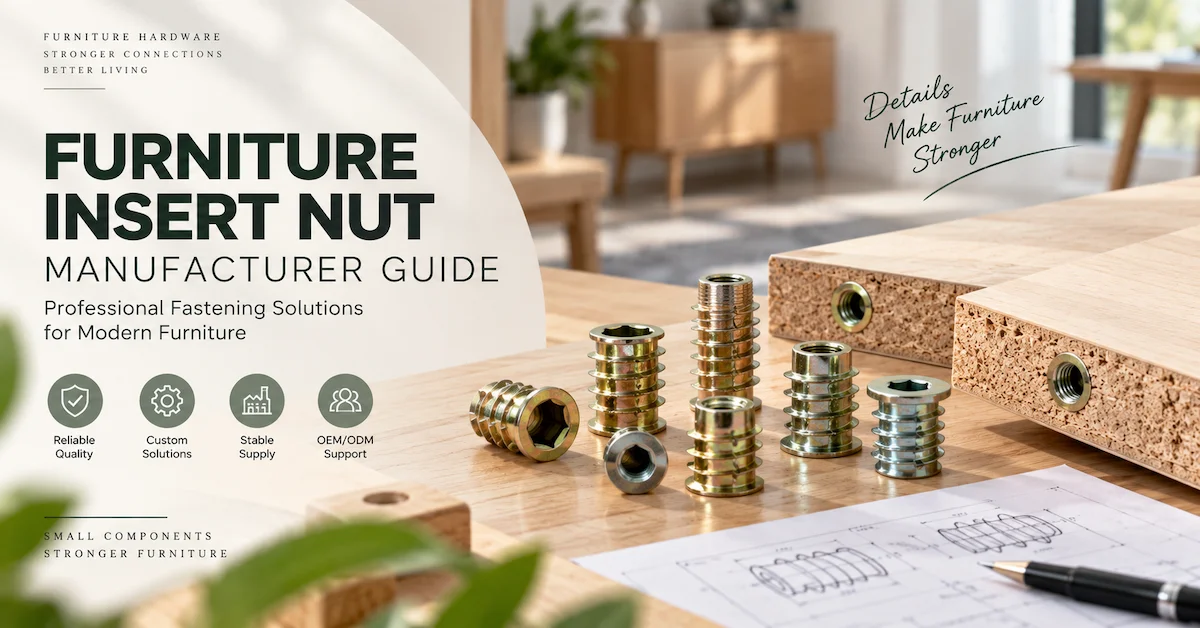
Insert nuts create internal threads inside furniture panels and components.
They are useful for furniture requiring:
- Repeated assembly
- Strong threaded connections
- Replaceable components
Common applications include:
- Cabinets
- Tables
- Beds
- Modular furniture
Advantages include:
- Improved connection strength
- Better assembly consistency
- Reduced panel damage
- Longer product life
JHFIX provides nut and threaded hardware solutions for furniture and industrial applications.
Hidden Furniture Connectors
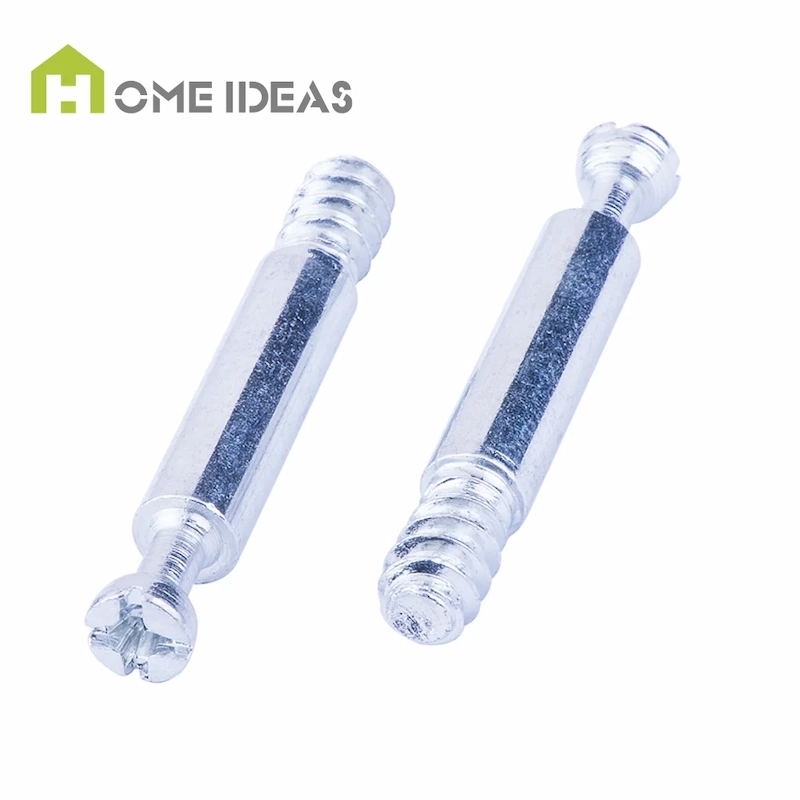
Modern furniture designs increasingly focus on clean appearance and efficient assembly.
Hidden connectors allow manufacturers to achieve:
- Minimal visible hardware
- Improved product appearance
- Flexible furniture structures
They are commonly used in:
- Premium cabinets
- Modern furniture
- Customized furniture projects
Common Applications of Cabinet Connectors
Cabinet connectors are used across multiple furniture manufacturing environments.
Kitchen Cabinet Manufacturing
Kitchen cabinet manufacturers require connectors that provide:
- Strong panel connections
- Accurate assembly
- Long-term stability
- Efficient installation
Common hardware includes:
- Cam locks
- Connecting bolts
- Screws
- Shelf supports
Wardrobe Production
Wardrobes often use large panels that require reliable connection systems.
Important requirements include:
- Strong joints
- Easy installation
- Repeated assembly capability
Flat-Pack Furniture
Flat-pack furniture depends heavily on efficient connector systems.
Hardware must support:
- Simple installation
- Compact packaging
- Accurate assembly instructions
- Reduced installation errors
Office Furniture Manufacturing
Office furniture requires hardware that supports:
- Frequent assembly
- Commercial durability
- Stable connections
How Cabinet Connectors Improve Manufacturing Efficiency
For furniture manufacturers, connectors are not isolated components. They are part of a complete assembly system.
A professional cabinet connector manufacturer considers:
- Connector compatibility
- Drilling accuracy
- Panel structure
- Assembly process
- Packaging requirements
A well-designed connector system can help manufacturers:
- Reduce assembly time
- Improve production consistency
- Lower installation errors
- Simplify hardware management
Materials Used by Cabinet Connector Manufacturers
Material selection affects connector performance, appearance, and cost.
Carbon Steel Connectors
Carbon steel is commonly used because it provides:
- Good strength
- Flexible processing
- Cost efficiency
Applications include:
- Connecting bolts
- Screws
- Metal furniture fittings
Zinc Alloy Connectors
Zinc alloy is often selected for furniture connectors requiring:
- Accurate dimensions
- Good appearance
- Decorative finishes
It is commonly used in visible furniture hardware applications.
Stainless Steel Connectors
Stainless steel is suitable for applications requiring improved corrosion resistance.
Common environments include:
- Kitchens
- Bathrooms
- Humid areas
Surface Finishes for Cabinet Connectors
Surface treatment influences:
- Appearance
- Protection
- Product durability
Common finishes include:
- Zinc plating
- Nickel plating
- Black coating
- Customized finishes
Furniture manufacturers should select finishes based on product requirements and application environments.
Manufacturing Process of Cabinet Connector Manufacturers
A reliable cabinet connector manufacturer should control the entire production process.
Engineering Review
The development process usually starts with:
- Product drawings
- Customer samples
- Technical specifications
Engineering teams evaluate:
- Product structure
- Manufacturing feasibility
- Material selection
- Production methods
Production Processing
Depending on the product design, manufacturing may include:
- Cold heading
- Machining
- Tapping
- Stamping
- Assembly
These processes help achieve consistent product dimensions and performance.
Quality Inspection
Quality control is essential for furniture connectors.
Important inspection areas include:
Dimension Accuracy
Checking:
- Connector size
- Thread dimensions
- Component tolerance
Functional Testing
Testing:
- Assembly performance
- Connection stability
- Component matching
Surface Inspection
Checking:
- Coating consistency
- Surface defects
- Appearance quality
Packaging Inspection
Ensuring:
- Correct quantities
- Correct hardware combinations
- Accurate labels
JHFIX supports furniture hardware manufacturing with processes including cold heading, tapping, stamping, assembly, packing, and inspection. More information is available on the JHFIX About Us page.
OEM Cabinet Connector Solutions
Many furniture brands require customized connector solutions rather than standard products.
A professional OEM supplier can support:
Custom Connector Development
Based on:
- Drawings
- Samples
- Furniture structure requirements
Suppliers can help develop:
- Custom dimensions
- Special connector designs
- Matching hardware systems
Custom Materials and Finishes
OEM projects may require:
- Different materials
- Special surface treatments
- Appearance customization
Complete Hardware Kits
Furniture brands may need complete packages including:
- Connectors
- Screws
- Nuts
- Accessories
This simplifies production and packaging management.
Custom Packaging
Packaging solutions may include:
- Bag packaging
- Box packaging
- Hardware kits
- Customized labels
JHFIX provides furniture hardware solutions for OEM customers requiring integrated sourcing support.
How to Choose a Reliable Cabinet Connector Manufacturer
Before selecting a supplier, furniture buyers should evaluate several important factors.
Manufacturing Capability
Check whether the supplier can support:
- Product development
- Multiple production processes
- Quality control
- Customized manufacturing
Product Range
A supplier with a complete product range can simplify sourcing.
Important categories include:
- Cabinet connectors
- Screws
- Nuts
- Stamping components
- Hardware kits
Engineering Support
Technical support is important for customized projects.
A capable supplier should assist with:
- Drawing review
- Sample development
- Product improvement
Quality Management
Evaluate:
- Inspection processes
- Production consistency
- Material control
- Packaging accuracy
Long-Term Supply Stability
Furniture manufacturers need suppliers that can support repeat production.
Important considerations include:
- Stable quality
- Reliable communication
- Consistent specifications
- Production capability
Common Mistakes When Buying Cabinet Connectors
Choosing Only Based on Price
The lowest price does not always provide the lowest total cost.
Poor-quality connectors may lead to:
- Assembly issues
- Production delays
- Customer complaints
Ignoring Connector Compatibility
Furniture connectors should always be evaluated as a complete system.
Examples:
- Cam lock + bolt
- Insert nut + screw
- Connector + drilling design
Skipping Sample Testing
Testing samples before mass production helps identify:
- Fit problems
- Installation issues
- Quality concerns
Selecting Suppliers Without OEM Capability
Customized furniture projects often require:
- Engineering support
- Product modification
- Packaging solutions
Cabinet Connector Supplier Evaluation Checklist
| Evaluation Item | Importance |
|---|---|
| Product consistency | Stable production |
| Dimension accuracy | Assembly performance |
| Material control | Product reliability |
| Surface finish | Appearance quality |
| OEM capability | Custom projects |
| Packaging support | Production efficiency |
Why Choose JHFIX as Your Cabinet Connector Manufacturer
JHFIX focuses on providing furniture hardware solutions for global furniture manufacturers, brands, and distributors.
Our solutions include:
- Cabinet connectors
- Furniture screws
- Nuts and threaded components
- Stamping hardware
- Customized hardware solutions
- Packaging support
With manufacturing experience and OEM capabilities, JHFIX helps customers develop reliable furniture connection systems based on drawings, samples, and application requirements.
For companies searching for a reliable cabinet connector manufacturer, JHFIX supports product development, customization, and long-term manufacturing cooperation.
FAQ
What does a cabinet connector manufacturer produce?
A cabinet connector manufacturer produces hardware components used for furniture assembly, including cam locks, connecting bolts, insert nuts, hidden connectors, and customized furniture fittings.
What connectors are commonly used in cabinet manufacturing?
Common cabinet connectors include cam locks, connecting bolts, insert nuts, screws, and hidden furniture connection systems.
Are cam locks suitable for flat-pack furniture?
Yes. Cam locks are widely used in flat-pack furniture because they provide secure, concealed, and detachable connections.
How do I choose cabinet connectors for MDF furniture?
Selection should consider panel thickness, drilling requirements, connector type, material, and assembly method.
Can cabinet connectors be customized?
Yes. Professional manufacturers can customize connector dimensions, materials, finishes, and packaging according to customer requirements.
What information is needed for OEM connector development?
Customers should provide drawings, samples, application details, dimensions, material requirements, and production quantities.
How does quality control affect cabinet connector performance?
Quality control ensures consistent dimensions, proper matching, reliable assembly, and stable performance across production batches.
Conclusion
Cabinet connectors may be hidden inside furniture, but they play a major role in product quality, assembly efficiency, and customer satisfaction.
For cabinet manufacturers, selecting an experienced cabinet connector manufacturer helps ensure reliable connection systems, consistent production, and flexible customization options.
JHFIX provides cabinet connector and furniture hardware solutions including connectors, screws, nuts, stamped components, and customized packaging services.
Furniture brands, cabinet factories, and OEM manufacturers looking for reliable hardware partners can contact JHFIX to discuss product requirements and customized solutions.